






A Spiritual Passage: Reflections on Hiking, Healing, and Brotherhood with Rand R. Timmerman, Esq.
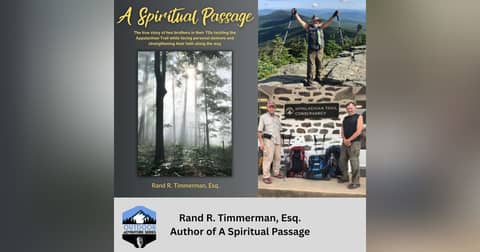






Welcome to another episode of the Outdoor Adventure Series! Today, Howard welcomes Rand R. Timmerman, Esq., author of A Spiritual Passage, a captivating memoir chronicling the journey of two brothers in their seventies as they hike the Appalachian Trail. Together, they explore not only the physical and logistical challenges of tackling 2,200 miles through 14 states, but also the deeper, spiritual lessons discovered along the way.
In this episode, Rand opens up about his past struggles with alcoholism, his service in the Marine Corps during Vietnam, and how these experiences shaped his outlook and resilience. He shares intimate reflections on his relationship with his brother, their different paths in life, and how they ultimately came together for this extraordinary adventure. Listeners will hear about the duo’s unorthodox hiking strategies, encounters with quirky and inspiring hikers, moments of physical and emotional hardship, and the powerful aha moments that made this trek a truly transformative experience.
Whether you’re a hiking enthusiast or drawn to stories of redemption and connection, this conversation offers insight, humor, and inspiration for anyone seeking to find meaning on or off the trail.
DISCUSSION
00:00 Growing up in rural New York
04:43 Personal growth and self-discovery
08:43 Reflecting on Childhood and Family Paths
10:16 College struggles and joining the Marines
15:13 Marines deployment in Puerto Rico
18:49 Discovering his alcoholism struggle
22:26 Family gatherings and sibling dynamics
24:51 Preparing for the Hiking Journey
28:30 Experiencing challenges on the trail
29:24 Hiking with his brother
33:37 A friendly walking competition
36:04 Influential figures on the trail
40:24 Coaching while hiking trails
45:14 Climbing Mount Washington
47:23 Ron's aha moment on Father's Day
49:29 Making a tough decision
55:16 Rand Timmerman and his book
55:58 Rand Timmerman's journey photos
LEARN MORE
Website: https://www.randtimmerman.com/
NEXT STEPS
Visit us at https://outdooradventureseries.com to like, comment, and share our episodes.
KEYWORDS
Rand Timmerman, A Spiritual Passage, Sobriety, Appalachian Trail, Brotherhood, Outdoor Adventure Series, Podcast Interview, Podmatch
#RandTimmerman #ASpiritualPassage #Sobriety #AppalachianTrail #Brotherhood #OutdoorAdventureSeries #PodcastInterview #Podmatch
My Favorite Podcast Tools:
- Production by Descript
- Hosting Buzzsprout
- Show Notes by Castmagic
- Website powered by Podpage
- Be a Podcast Guest by PodMatch
- Banner Customization by Nano Banana & Canva
Hello everyone, this is Howard Fox, and welcome back for another episode of the Outdoor Adventure Series. Rand Timmerman is our guest today. Rand is the author of A Spiritual Passage, a story of two 70-something brothers who hiked the Appalachian Trail, and really the story about the why. Why did these two guys decide to hike? And we're gonna learn a little bit about uh their history, uh, really the challenge of preparing for this really arduous journey, and also what was the kind of the lessons learned, the aha moments that came out of as a result of this uh very much spiritual uh journey as well, and uh uh really athletic journey. So, Rand, it's a pleasure to have you on the podcast. Welcome. Thanks, Howard. Glad to be here. Fantastic. Now, I I have to ask, uh, I love the uh behind you. You've got the obviously your your Marine Corps history, I love that. And you've got the flag, you've got the copies of the book. So I imagine you get up to speak in front of audiences uh a lot. Uh, because you you've got the the being the the veteran connection as well as the author connection, as well as your professional background as well.
SPEAKER_00That's true. Yeah, I do speak quite a bit. I've been doing a fair amount of podcasting and and talking about my book and my history and trying to help people who might be struggling with um some of life's difficulties, including addiction. I had an alcohol problem. I've been 12 years sober yesterday. Excellent. Excellent.
SPEAKER_01I I I guess I should I never really asked anyone this question. Uh being 12 years sober, that's that is in itself a major accomplishment because I know how bad the addiction of uh alcoholism can be uh from others in in my life that have faced this. But and had and also your background as a veteran in Vietnam for that matter, and just being around in a very high stress environment working with lots of young kids, men and women, uh, and then some older. And you're seeing a lot of things, you experience a lot of things. When when did the alcohol become a part of your life? I'm curious about that.
SPEAKER_00Yes. I grew up in a very rural uh village in called Adams, New York, in upstate New York, and then in I was born in 1946. And my my I was surrounded with relatives, men who were veterans of World War II, including my father, who was a Mustang pilot. When he came back, he got polio, ended up a year in the hospital, eight months in iron lung, and he was paralyzed from the waist down when it was all over with. But he he was a very hard-working man. My parents didn't drink, thank God, but we were very impoverished. And the first time I drank alcohol, I was 13 years old, I got invited to a party, and I was so uncomfortable. I'm wearing clothes that other people wore out, shoes have holes. I mean, we were really poor, went to bed hungry a lot. And I found a bottle of Jim Beam in the basement, and my friend that came with me, uh, we're both the same height, but he's 200 pounds, I'm 99. And the next morning I went and told my dad, because I figured he was gonna find out what happened. And I swear I drank more of the of the bottle than he did. It was a pint, it wasn't a lot, but when you're first time in, I mean, it just gave me such a rush, it was unbelievable. Uh, we crawled home, I couldn't walk anymore, but I didn't get sick, and uh it had a profound uh effect on me. So I I owned up to my father, uh Howard, and I stood way back because my father uh a short temper, he didn't like a whole lot of emotional strain given his what he'd gone through. And sure, I stood way back and told him, and he just looked, he shocked me because he looked at him and he said, Okay, butch, well, just don't do that again. And David's in the hospital. David. David, who weighed 200 pounds and okay, and drank less, ended up in the hospital. And I just knew at that moment that I was definitely gonna do it again. Because I had Clint Eastwood. When I drank, I was turned into a movie star. I was six foot four, not five foot eight. I was I didn't have acne. I was handsome, I was sexy, I was funny, everything I wanted to be. The rest of the time I didn't feel adequate in any domain. But the good thing was I made a decision not to do anything else. Why would I? Right. But I realized it was so powerful and becoming a part of my life, probably gonna be a fairly significant part of my life that I would never do any of the drugs. And I didn't, I never smoked pot or anything. That was the upside, but right, and for a long time it didn't really bother me. For a long time it wasn't available. My parents didn't drink, thank God. Right, yeah, but I went through the war and all that. My brother did too. We were both traumatized from he was a religious person right from the get-go. I never lost it. I that first battle, I just um decided there wasn't if there was a god, he really had things messed up.
SPEAKER_03Really?
SPEAKER_00Wow, yeah, well like hell, but I just I was very angry. And I decided I would never have a relationship with the higher power again if I had one at all. But you know, when I finally the disease took over my late 50s, early 60s, I struggled for quite a while. But I um I finally made a connection with the higher power, which is a such a blessing. It changed my life in so many ways. I mean, I'm still active in the same recovery program, but I go to meetings every day and I work with guys every day, and it's just changed my life. And it made it possible for me because I was four years sober when my brother lost his wife to do the trail. If I had still been drinking, there's no way. No way.
SPEAKER_03Okay.
SPEAKER_00So that's a quick history of my alcoholism.
SPEAKER_01Well, there's a lot of ways to go. I I love the fact that that first drink, nothing happens to you. You've got this bravado, and that it kind of plants the seed in a way of in some ways who we are becoming or going to become, and it's like I am like invincible in some ways. Yeah. Your your brother, had you both gotten along growing up. You mentioned that he was more religious than you, but had you gotten along? Did you break bread with each other, go play walk in the woods with each other, go fishing, do things with each other, or had you had you been for a little farther apart?
SPEAKER_00No, we were very close. We were a year apart. I was the oldest, and we had a very difficult time growing up. I kind of took a different path than Ronnie. Ronnie was very uh willing to do whenever my our parents said he just did it. I mean, he was almost like the perfect kid. And because of my father's situation when he wasn't working at his jobs, uh, I had to be with him all the time. And I was just gopher get this done out. I helped my dad. So I resented it. My brother and my younger sister, and then my little brother, who was nine years behind us, uh they had a normal childhood, but I really didn't because I was I was working all the time. Right. I wasn't in school or or and uh I got very involved. We were in a rural area, I was running around farms working 10 levels. I was driving tractors and hauling manure spreaders at 12 years old. Oh wow, hunting in the woods with uh a single shot 22 rifle, suiting squirrels and rabbits and stuff, and bringing meat home so we'd have some meat uh when I was 12 years old. I mean, I had a really I was a trapper. I had trapped, I got very involved in the Boy Scouts. I pretty much did anything I could to get out of the house. So my brother and I were kind of on a totally different track. I'm kind of a wild, frisky, you know, I'm pretty good kid 90% of the time, and then I would do something, my dad would get really angry with me, and sometimes we would get physical, uh, which I re I knew where the buttons were, I was partially to blame for sure.
SPEAKER_01I when I was growing up, I I I I I look as I look back, I could see where I pressed buttons to. And uh I I reg I'm sure if my dad was alive, may he rest in peace, would have regret. I know I have regret as I think about my my father. What what I'm what I'm finding is very interesting is you have this thread, the story of growing up, the challenges that you face, the relationship with your brother. And you went on to uh a great career, uh, an important career in the Marines, and then on to being a Jag, judge uh judge advocate general. That it seems like those two paths you you wouldn't anticipate you going from this one path that you were on to this other path.
SPEAKER_00Yeah, I know. I sometimes I feel like uh the movie with you know, um Tom Hanks. Um oh, what the heck is the title of it? Go. For scump. You know, the butterfly thing. I mean, my what my life took so many twists and turns. I did go off to college when I graduated. My brother went right into the army when he graduated a year later, but I was lost soul in college because I didn't know what I wanted to be when I grew up, and I was a janitor cleaning toilets from midnight to eight every day, and then worked as a pin setter in a bowling alley. And I'm going to college full time and I was getting decent grades, but I had no money, and I didn't know what the hell I wanted to be. I finally changed my major, my third semester to psychology because I knew I was a nut job. I had to figure out what the hell was wrong with me. And then I got drunk in a bar one night, and the next morning I'm on the pool table when the owner came back in. Oh boy, just coming to, and he turns the radio on, starts cleaning up, and they're talking about the first marine division being in Vietnam. And I had one of my aha moments, and uh I got off that pool table and walked out of there. And a month later, I'm at the war memorial in Syracuse, New York, pledging to defend my country against enemies, foreign and domestic. And nine months later, I'm in a rice battle going, Oh my god, what have I done?
SPEAKER_01I could imagine, yeah.
SPEAKER_00But uh, I did survive that. I like to say that the Marine Corps got me killed at least almost 20 times. I mean, and then by a fluke, it gave me a legal career because they made me a second lieutenant in Vietnam for a couple months. They called them Mustangs, okay, so I could do officer, even though I wasn't a real officer. I was a corporate, actually. And then when I was getting ready, I survived, which most of us didn't think we were going to. The mortality rate and the injury rate was be high. A colonel came to see me. I hadn't seen a colonel in six months, I swear to god, and started talking to me. He said, Well, you're gonna you're not a second lieutenant anymore. Now you're a corporal, and you're gonna get out in three, four months. Or I'm recommending that they send you to OCS, Officer Kennedy School, and you'd be a real officer. Oh well, I didn't know what the hell I was gonna do. I had real no fan. I said, Okay, sure, why not? Okay, so I went back home, uh, had 30-day leave, went into the OCS. They actually made me a sergeant in OCS, were promoted to sergeant. But then when I got done, I was a second lieutenant, and then uh uh I decided to be I wanted to be in the air wing because I didn't want to be in the first actually. When I got to Vietnam, I was with the first marine division. Okay, that's that was my unit. Talk about butterfly effect, right? And then so when I get done with all my officer training, I had been a machine gunner, uh helicopters with the first marine air wing, which was right next to 1st Marine Division in Denang. Right. So I decided I didn't want to be a grunt anymore, that's what they call infantrymen, and I went to Cherry Point where the first Marine Air Wing was. So now I'm in the first Marine Air Wing, and I run into an old friend of mine, he had been my drill instructor, he was uh a Mustang captain at that point, and I didn't know it, but he became my guardian angel. And when I got there, he said, Do you want to go to any schools? And I go, Oh, I don't know what you got. And he goes, um, he rallying off these places and he goes, Newport, Rhode Island. And I go, I must have got Howard, this is what happened. And I said, Newport random, what's that? And he goes, It's a judge advocate general school, it's a Navy school for legal officers for the Navy and the Marine Corps. The next day I'm checking in.
SPEAKER_03Oh, wow, yeah.
SPEAKER_00So I get there, the class I'm in, there's a hundred of us, 99 of them are captains who have their college degrees and their law degrees. Some of them had already passed the bar. They went through all the Marine Corps training for officers, but they made them captains because they didn't, nobody would ever do that route, right? Because the money was good enough. So, and little old me. And they're all looking at me like, where did this guy come from?
SPEAKER_01That's that's like a that's like a case for imposter syndrome. Why am I here?
SPEAKER_00Exactly. Well, 20 of us rented a mansion out by the Atlantic Ocean because it was the off-season. We each had our own room in this palatial place, and uh, for whatever reason, these guys want to party, you know, they've been working hard, and now they're kind of celebrating, and some of them are gonna go to Vietnam and so on and so forth and so forth. And and I for whatever reason, I just I'm not drinking during the week, I'm just gonna study, and then I'll hang out with these guys on the weekends, whatever. Well, son of a gun, we graduated. I am the class matter man. I got the yes, of course. Anybody in the class, all those guys are like, what the hell? How did you don't know anything? Well, I knew how to study, and I knew I knew a lot about the Uniform Code of Military Justice. So I went back to Cherry Point, they made me uh defense attorney. Actually, I had a couple of acquittals, so they solved that problem by making me a prosecutor. Okay, and and we had a contingency down at Roosevelt Roads, which is a Navy base down in Puerto Rico, and it was a contingent of Marines, and I would go down, they would send me down there every six months or so, and I'd be there for a month to do trials and things like that. And the second first time I came back, I'm going, holy crap, I'm not at the top of the list to go back to Vietnam. Because if I had gone back to Vietnam, I probably would have been a forward observer. Right. Right. They would have, because I was kind of like perfect guy. And but now I'm not back down the list, and six months go by, I go back down to Puerto Rico. I come back, I'm talking to my friend who keeps giving me all these orders, and I said, Darn, I'm I I'm not at the top. I might not have there might not be enough time for me to go back to Vietnam. I mean, he looked at me, he goes, You stupid. Why do you think I keep sending you down to Puerto Rico? Because he knew if I went back to Vietnam, I would get killed. Almost certainly.
SPEAKER_01He was like a guardian angel.
SPEAKER_00Yeah, absolutely. Yeah, and but see, here's the thing, it gave me a whole career. It changed my whole life in in tremendous ways. And I had an awesome legal career. I was married with one child, another one on the way. When I got out of the Marine Corps, I went to Syracuse. The GI Bill didn't even pay the tuition. I'm working three jobs again, I'm going to college for I'm sleeping five hours, four or five hours a night. So I'm not, I'm still poor as hell and not liking that at all. But I ended up having a great uh legal career. I took on some pretty crazy cases right away, and I'm on TV. All of a sudden, I'm in the radio and the newspaper, and and then I ended up being the first lawyer to ever cross-examine the director of the FBI lab on the efficacy of DNA in the murder case, which was all based on circumstantial evidence, and I was representing one of the defendants. Right. I mean, what are the odds of that in upstate New York in rural counties that have way more cows than people? And there was absolutely hardly any publicity about it. So there's another butterfly. I mean, my life was just it's been amazing that way. And then, of course, the whole Appalachian Trail thing, which the way that came about is amazing too.
SPEAKER_01Had you and believe it or not, we're gonna talk about that. And it's trying to weave, I'm trying to figure out look at as I share with my clients when I'm coaching them, I'd like to know what the sandbox looks like and what the guardrails where are the guardrails. But how and I'm as far as being an uh an alcoholic, had that always been as you were go as your career is moving forward, had the alcoholism always been there to the until you made that decision one day, I'm done with this. That another aha moment.
SPEAKER_00In the beginning, like a lot of alcoholics, it was mostly a solo celebratory thing I would do to celebrate, you know, outcome in a trial or like that, or partying with friends. I didn't, I wasn't crazy. Okay, I was very driven to be successful. I was very so much family type man and stuff like that. But I would party and do stuff, and every once in a while I get a little overboard and I would just stop for three or four or six months. Okay. So I wasn't a slave to it for decades.
SPEAKER_01Okay.
SPEAKER_00The problem is if you are a real alcoholic, which it turns out I am, you metabolize alcohol differently, and your body creates an excess of acetone. That's what gives you that unbelievably obsessive feeling that you have to drink. I thought it was some kind of a moral deficiency on my part when I got in my late 50s, early sixties, and I lost control. And it just damn near killed me. I mean I could tell you some pretty awful stories. But for the most part, and I actually before it really went off the rails, I made a decision not to to stop my legal career. You know, I didn't need I didn't think I had enough money, but it turned out I did.
SPEAKER_03Okay.
SPEAKER_00I'm not ostentatious at all, so but uh and then I just focused on my cause it took me a while to to come overcome the obsession to make connection with a higher power, which changed my whole life.
SPEAKER_01Okay. What when did this idea of of even hiking the Appalachian Trail, let alone with your brother, come about is because I and what you have shared so far, other than the rigor of being in the Marines, other than the rigor of having served uh in a very hostile environment? I'm not here. I mean, we talked about uh, yeah, I would go out in the forest and I would go hunting, this and that. But the Appalachian Trail, when did that that that come onto your radar? And what planted that seed for you? Like, I want to go do this, and then how did you come and you you talk a little bit also about your brother, how he came along after the loss of uh of his spouse? But where did that linkage come in? Like, I this is something I want to do.
SPEAKER_00I actually did some hiking in the uh in the smoky mountains and in on some sections of the Appalachian Trail in my 40s and 50s. Combat veterans come back, uh things would pile up on me. I would just go into the woods for a weekend and go on in uh and my brother had moved to so here's what happened. Okay, it was totally my brother's fault, Howard. 100%. I we'll stick, we'll stick with that. Because when he came back from Vietnam, he my mother's best friend was Edie. Right, right. Edie was 14 years older than Ronnie, and when Ronnie met her and they went on their first date, she brought the three youngest of her seven children with her out of the country. That's called chaperoning. Wow. Nope. So Edie's divorced with seven, seven kids, and and here's Ronnie, this warrior back from the war, and they they started hanging out, and Ronnie fell madly in love. They fell madly in love. And they uh they got involved in the Church of Latter day Saints in uh Watertown, New York, but they built a house called. To there, they raise Ronnie helped raise the kids and do all that stuff. They got very involved in the church. Ronnie was a bishop for four years, funerals, services, weddings, all kinds of stuff. Then they ended up moving out to Utah. So Ronnie lived in Utah for like 35 years. Well, I'm on the East Coast. Some of their kids are on the East Coast, so they would come back every summer. We would spend like one day a year together. Okay. Me and my youngest brother, Marty, who also liked a little juice now and then. I would get a little buzz going on at these picnics we'd have. And then we start making fun of Ronnie because he wasn't having any fun because he didn't drink and he was a bishop in the morning. And it was all nature. My siblings and I have always been very respectful and decent with each other. We never had any uh problems that I know of anyway, but we weren't really close. Well, then Edie had a stroke in 2011. By then they have uh they ended up with 27 grandchildren. My brother today has 27 grandchildren and 30 great-grandchildren.
SPEAKER_03Oh, wow.
SPEAKER_00Because a lot of them got involved in the Mormon church, and they believe in other like rabbits. They get together real young and they're very frisky, and their family start, you know, right, in their late teens, early 20s, and uh that's kind of what happened there. But Edie had a massive stroke in 2011. Unfortunately, it was one of those deals where it didn't get better, it actually got worse. And Ronnie took care of her for six years. So she passed in November, I think 17th of 2017. And I knew he was struggling. I was talking to him on the phone. Finally went out there. I had never been there before. I went out to his house in January, and we're hiking in the desert in Utah. We're both pretty, you know, we're in our 70s. I have an artificial knee. My left leg should have been worn out by then, and my right leg is a half inch shorter my left from a whole bunch of problems. Nothing but bone on bone. Right leg, so I lip pretty badly. I like to brag, I'm the lippiest man that ever hiked the Appalachian Trail.
SPEAKER_01Yeah, it's that's an added burden, too.
SPEAKER_00Oh my god, yes, I could tell you some stories. So I'm hiking with Ron, and and and I said, So what are you gonna do? And he said, hike the Appalachian Trail.
SPEAKER_01Huh? I said so. He was the spark.
SPEAKER_00Yes, absolutely. And I was very skeptical because, like I said, I had done some hiking. I mean, it's it's unbelievably uh difficult, and we're I'm 72, he's 71. And I said, How are you gonna do that? And he says, Well, I've already turned out he'd done a lot of crap. He bought all the maps, he got food, he had gear already, he had it all planned out pretty much, and then he said, Well, I'm just gonna get on a bus and go to Springer Mountain, start walking, run I'll go with you. So that's what we ended up doing. And in the book I wrote, the first version, I I wrote in there after two weeks max. And when Ronnie was looking at it, he goes, Two weeks max? What does that mean? You didn't think we could do it? I said, Hell no, I didn't think we could do it. I figured two weeks max, and you would get come to your senses and we go home.
SPEAKER_01So what happened what happened at that two-week point then?
SPEAKER_00We were in so let me tell you a little bit about the Appalachian Trail.
SPEAKER_01Okay.
SPEAKER_00It starts in Springer Mountain, Georgia. Right. First, I think it's 82 miles, takes you to Fontana Dam. It's right at the foothills of the Smoky Mountains and Klingman's Dome and all that. It's in right outside of Maryville, which is very close to Knoxville, where I have two daughters. So in that I just didn't think we could we would be able to finish it, but um we actually did. We would, we'd it was amazing. But uh I struggled, it was really hard in the beginning, and I ended up actually I thought, well, my daughter thought I'd broken a bone in my leg. I thought it was a really severe case of shin splints, except for the fact that when I got in the tent at night and went to sleep, normally if you have shin splits in the morning, you'll be your feet you'd be all right until you aggravate it again. But this pain wasn't letting off. So when we got to uh Fontana Dam, uh I told Ronnie, I gotta go get some, I'm gonna have to go to urgent care. This is something's really not right. So I drove to my daughter's, which was only like 30 miles away. Anyway, it turned out I had a very severe infection because I have hammered toes, okay, and the top of my toes would go every night my socks would be full of blood. Oh, I think too much about it, I'd just wash them out and let them dry out and put them on again in the morning.
SPEAKER_03Right.
SPEAKER_00But I got an infection, and by the time I got to medical treatment in the hospital, I was they said I was about 12 hours from being septic. So they put me on major antibiotics, and uh, I was off the trail for about a week, and then I went back on with Rob. And we just had these kind of problems, and we just kept going. But the Appalachian Trail goes from Springer Mountain, Georgia to Cahottan Mountain in Maine, which is right up the top part of Maine, 2,200 miles. It goes over 600 mountains through 14 states, right? 550 miles in Virginia. You think you're never going to get out of Virginia when you're hiking the Appalachian Trail. The elevation changes is 465,000 feet. Right? That's almost a half a million feet of up and down on the Appalachian Trail. 10 miles a day every day, 220 days. 11. Yeah, we averaged 11. Um the uh about three million people to hike on some part of it, like you were talking mentioned that you had done 3,000 or so every year, try to do the whole thing. Of that, about 70, about 450 people actually do the whole thing, but it was amazingly difficult. After my infection, we actually jumped up to Damascus, which is up by Bristol, and went north because we had gotten word that uh there was like a foot and a half in the Smoky Mountains. Well, a whole bunch of hikers got stranded. And one group of there's 17 of them that got stranded together, and somehow they got a hold of Forest Service and said, You gotta come and get us. And they said, Hell no, you have to walk out by yourself. So they had walked out. But so we jumped up Damascus and actually did the lower part of Virginia and then went back to Damascus and then went back south till we got back to uh Fontana Dam and then we went back up to Piersburg in Virginia and just kept going after. Okay, but we had to jump around a little bit, all right.
SPEAKER_01Just I've heard that a lot of uh hikers on the on the AT it's a solitary thing, and you yes, you're gonna meet folks along the way along the trail at the where you stop at night and and uh and and uh get in your tent. But what was it like for you hiking with your brother? And what was the what were the the what were the conversations like and how did you kind of feed off of each other, support each other, or maybe just get pissed off at each other? What was that like?
SPEAKER_00Yeah, I don't think we ever got pissed off at each other, okay, which is very good thing. We we we were very uh helpful to each other. Ronnie and I didn't hike together because of my limping, I could not keep up with him, and it drove me crazy. I could hike the same pace as him without much difficulty. You have kind of a natural pace that your body can if you go slower, you're just wasting time. You try to go a little bit faster, you're probably gonna be really bad shape at the end. So you you kind of have a gear that works for you. Oh, my gear was a little about the same as Ronnie's, but when you lip like I did, I'd every step I'm like two inches shorter than he is, so he just pulls away from it, right? Okay, then he would stop and wait for me, and then when I catch up to him, he'd turn like I get 10 feet away and he'd turn and go, and I oh my god, I can't. So we didn't hike together. We had two vehicles, so we did it a little bit untraditionally in the fact that we had two vehicles. There's some kind of a road crossing the Appalachian Trail every 10 to 15 miles. A lot of them are dirt, some of them are really bad, right? There's long stretches in the smoky mountains, there's two stretches about 40 miles, no roads. Priest is another area up in Virginia, so there's some places where you have to carry a full pack and go the whole the whole night. Most days, what we did. I like to brag. I slept in the tent on the Appalachian Trail every night because I did, but a lot of nights my truck was right five feet away, right? Ah, okay. So we got all our food, we had all the gear we need and everything. So we're carrying day packs most of the time. Uh and then in the morning, I would start out going north. Ronnie would drive down the mountain, get down the valley, go down to the next road that went over the Appalachian Trail, drive up to the trail, park his car, and he would hike towards me, and I would hike towards him.
SPEAKER_01Gotcha.
SPEAKER_00Okay, and then we would meet, and he would always say, He wouldn't, when he would meet me, he would say, he would look at this thing. He had a Fitbit, he had a map thing that he was using. I chose not to do what he did. He was studying maps and all he wanted to know all the technical stuff because he's a commercial pilot, right? That's what they do, they gotta know all the facts.
SPEAKER_01Gotta have checklists.
SPEAKER_00Yeah, I decided after a few days, I'm just gonna hike it like it's 1970 or even 1990, like Bill Irwin did. And okay, and he did it, and and I'm not gonna pay, I'm not gonna know what the elevation changes are gonna be. I'm just gonna enjoy it. And I took a lot of pictures, Ronnie took hardly no pictures. He was just marching for him. It was like doing this, I'm gonna be in nature, I'm gonna get over this grief and sadness, and and I was like more in the mindset. I am never coming here again.
SPEAKER_01I always want to get to the case.
SPEAKER_00I'm I'm no, but I will in a good way. I'm never gonna be in this spot again. I am going to enjoy it, right? So I'm trying to take it all in. I go around the corner and say, Oh my god, I take a picture. So Ronnie going south was running into hikers all the time, right? Yeah, and when we were going north, uh, when I was going north, in the beginning, there was a lot of people who were passing me because they'd be faster. We even we almost never stopped, Howard. Never stopped, except when Ronnie and I met. And then Ronnie would always go, look at the thing, well, bro, I've walked 6.4 miles and you walk five point. Okay, good, bro. So this he did this every day. So one day we were in an area where I wasn't really arduous with a lot of rocks and stuff like that, and I thought, I'm gonna I'm gonna beat him. Oh I was jogging in some place. So when I ran into Ronnie, I re immediately it's basically and then we're sitting there having a little snack, and he goes, I've walked five point, and then you've gone six point three. How do you do that? Albert, I never beat him again.
SPEAKER_01That was the one only time. There a little little uh brotherly competition there as you and I I I I do love the fact that you know you this was a uh kind of an uh uh an alternative approach to hiking the trail, okay. And and then it's also testament, there's no one way to do it. I mean, you have yes, you have to be prepared, yes, you have to have good mindset and want to do it, and and and I love the fact that you also were in the moment like I'm never gonna do this again, so I want to enjoy it. Because your book is actually very interesting, and we were chatting about it before the show. It's a big book. So, how did you organize the book? And what what are the are the a lot of those photos that you took are actually in each chapter as as well?
SPEAKER_00Correct, yes, that's a good question.
SPEAKER_01Yeah, this is what the book looks like on the else turn it side, turn it on the uh on the on the spine. That's a thick book.
SPEAKER_00Oh, yeah, it's 364 pages. Okay, it's full of pictures.
SPEAKER_01Oh, wow. Nice.
SPEAKER_00Somebody buys this book, they can hike the if you're ex you're a hiker and you're in your 80s, I'm not gonna hike the Appalachian Trail, but I sure would like to. You could actually do it vicariously by because uh every other chapter is about where we were, where we went, what mountains and things that we went over, what the elevation changes were, some of that kind of stuff, and then pictures of what it looked like along the way, right? So you can actually go through the book and see what the trail looks like on that day, the things that I saw, the best of the things that I saw. I took 5,000 pictures, there's 500 in the book.
SPEAKER_01I love that. As you were on the trail earlier in our conversation, as you were as you were sharing about your journey in the military and that first colonel that you talked about, who in some ways was like a guardian angel helping to shift your trajectory of where you're gonna go. Then you had your friend that was kept giving you these assignments in Puerto Rico. Was there anybody on the trail that you just connected with and they were whether not so much a guardian angel, but just wow, this I like this person. I could I'm glad I met them. Is there anybody like that that you met?
SPEAKER_00Oh my gosh, yeah. And there's pictures of uh some of the hikers in the book, too. Uh it was amazing the people on the Appalachian Trail that I that we ran into, and you get into a bubble where you see the same people uh for a while, and then they take a day off and you move ahead of them or or whatever. And so you had like these bubbles, and what in so I was kind of a spectacle in the way, well, both of Ronnie and I were, because we're a lot older than anybody else, right? Um with my limping too, that kind of stuck out to people. Um and uh fairly early on, I don't know where we were exactly, probably in Lower Virginia. I ran into this Oriental man, he's like five foot four, dressed like a samurai warrior, right? He's got the man bun on the back, could have had a sword in there for all I know. He's wearing these robes, but he's got a full pack and everything, and the hiking sticks and stuff. And his his trail name was half slow. I don't know where he came up, but okay. So one day he got sick of watching me whip, I guess. I don't know. He came up to me and he goes, Ranbo, that was my trail name. Ronnie gave me my trail name, Ranbo. He said, Ranbo. Ranbo. Okay. I want you're gonna hold hands. I'm gonna say a prayer, I'm gonna help you with your knees. And I said, Okay, so we're standing in the middle of the trail holding hands, and he's saying a prayer, and people are walking by us looking a little bit funny, and I'm standing there and he goes on and on, and all of a sudden I hear him say McBath. And I then I realized he's reciting Shakespeare. I go, uh hey Absolutely. I think you know what, I think I think I feel better. I did I I really appreciate you you doing this for me. And he said, Okay, fine. We let go of hands, and I walked away, and I did. The pain in my le in my knees was gone. How the heck did that work? I don't know. Of course, it came back, but you know, oh yeah, I could tell you all kinds of stories of the other hikers, and that's a big part of it. Everybody out there is probably there because of some aspects of their life they don't like, to be honest with you. One day, one night my brother goes, Hey, bro, there's a lot of weird people. There is, he's right, there's a lot of weird people out here, and I go, Yeah, Ronnie, I know we're all weird. And he goes, Rand, you and I aren't weird. I go, Yeah, we are. Everybody out here is weird, bro. Normal people don't do this.
SPEAKER_01You you just got you just have gotten used to it over the years. It's like the frog in the in the waters in the pot of water story. That's slow boil, the frog's never gonna jump out of that water. So it's so you guys are who you are. You've got a 70-some years of getting to that point versus the you know, just jumping right in. Oh, let's just let's just do it and not be prepared. What I would imagine that I mean those photos are very interesting to me because I'm a uh I have a photography background as well, and I love just being in the moment, slow hiking, slow birding, just co even coaching in nature, going on walks, coaching folks on the trail. And I just love just being in the moment. I don't know that I could do the trail because I'd also want to feel like I would need to finish, get the cataton, and do that. Did you when you got up there? Did you and your brother have the poles in your hand with the catan sign behind you going, Yay?
SPEAKER_00No, uh, I have that picture of me on Killingdon Mountain in Vermont. I only did 1,863 miles.
SPEAKER_01Okay.
SPEAKER_00Ronnie finished up with Rick while I was having my hip replaced because I fell down a really bad rock slide in Wilcox Mountain in Massachusetts.
SPEAKER_01Oh, okay.
SPEAKER_00Yeah, and I would have been killed except my foot got wedged between two rocks, and that's what stopped me from tumbling all the way out. It was horrible. I was 10 feet from the top, Howard. I'm almost to the top of the mountain. I've already been hiking for three hours to get there, right? But I'm on this huge rock slide. There's pictures of rock slides in the book. I don't, not that particular one, but and you look at them and you go, There's no way the trail goes up that. And then you look way up and you see a white blaze mark. Dang, that's where the trail goes. How could they do that? Why would they do that?
SPEAKER_01Why?
SPEAKER_00Yeah, well, what see the trail used to be in the 70s? The trail was only like 22,000 miles. It's 200 miles longer because every year they started making it go over the top of more and more mountains. Back in the 70s, they didn't go over the top of every mountain in the in like in Shenandoah Mountain area. There's a road that goes through that's where the trail went. Now it goes over every mountain in the Shenandoah National Forest.
SPEAKER_01They're making you work for it. Absolutely.
SPEAKER_00And they've added that's why every year they add more miles to it. It's that I don't know if they're gonna do that anymore. There's kind of like mountains, I think.
SPEAKER_01Yeah, you'll be in Canada next. Well, it does go into Canada, actually. It does. Okay. When you finished again, your your decision that here's where I'm going to end. How did you feel? Was there like that? Oh thank God, or the euphoria? Or what what was this what what, if any, transformation? What happened came about for you?
SPEAKER_00Yeah, what happened for me? So I fell down that rock slide. I crawled back up to the top. I'm standing there. Look, I cannot go down this. I can't go back. It's just it was well, I probably would have. I was afraid I was gonna die on that stupid rock slide. I'm standing on an earthen trail on the top of Wilcox Mountain. I gotta go nine miles to get to where I'm supposed to be, and somewhere in there, I'm gonna run into my brother, or I can go three miles back down. No, I'm not so I just started walking. The pain was incredible. The pain was when I fell, I closed my eyes. I did that in combat a couple times too, where I was in a situation where there's nothing I can do and it's gonna be bad. And I had just have that habit. I closed my eyes. I thought this is gonna hurt really bad. Well, it hurt a hundred times worse than I thought. I didn't even know how I stayed. I mean, it was unbelievable. So anyway, I got up there, I walked out. After a couple miles, the pain kind of morphs into more like a hot type of ache. And that night uh we went to bed. I was really hurting bad. And then the next morning I couldn't I couldn't walk. Okay. So I said to my brother, I said, I'm gonna have to I can't go any further. So we went home for a month. I did not get any medical treatment. I went home, rested a couple days, started walking.
unknownOkay.
SPEAKER_00And then finally one day Ronnie calls me up and says, You want to go back and see if we can finish it? And I said, sure. So but I was I was kidding myself. I actually did another 200 miles after that. We got into the whites in New Hampshire. Now, this is real mountains, right? Mount Washington. Yeah. 6,600 and some feet, highest winds ever recorded in North America, like 244 miles an hour, I think it is. We got to Mount Washington and it was closed because of a snowstorm in July or whatever it was, August. Oh wow. So we jumped up, we did Moose Lock, which is a really tough mountain. We did Wolf. And then we went back to do Washington, which was going to be a three-day where we were gonna have to climb with full pack the whole nine yards, right? Not just a day pack. We walked in, started up. There's a picture in the book of me. And I turned around and I started crying. My brother had ever seen me cry my whole life, and I just thought I can't do it anymore. The pain was so bad, I couldn't sleep anymore. You know, we both lost 30 plus pounds. Yeah. I like an Auschowitz. You look at some of the pictures in the book. I look like an Auschowitz survivor. I not to downplay them or anything, but yeah, we're not we're we're physically at the limit, pretty much, and I just couldn't do it anymore. The pain was so bad. So long story short, I ended up having a hip replacement in Ronnie and Rick. He finished it with his oldest son, Rick.
SPEAKER_01Okay.
SPEAKER_00And I had pictures of that in the book too. And they went over Washington and made it to the they didn't, they weren't allowed to go up to Catadin because it was the beginning of the COVID. Oh, okay. Yeah, it was 2020 when they got there. What so but I did the best I could.
SPEAKER_01Okay. Was there a aha moment for you just on this journey? I mean, you you you've you went through a lot. I mean, it's physically taxing, emotionally taxing, and you you you got to part of it and you had a stop, and then you went back, you had a stop. So there's emotion involved here. So what was what was that some inside this thread of this journey? There's what was your aha moment? Like I did this. In fact, and again, I'm envious you did it with your brother. Okay. I mean, I don't have a brother, and I I would love to think if I had one, we would do something like this together. So, what was your aha moment?
SPEAKER_00Probably one of the best ones was when Ron had so he's struggling with the grief of his wife's death. And he had a aha moment where one day he was it was Father's Day of 2018 and saw a huge halo in the forest. It was a very dark day. That was the only sunlight that day. And there's a picture of a similar effect in the book that I took, where you had the rays of the sun coming down through the clouds and everything, and it just shows this big halo, and then the rest of the day it's all cloudy, so you don't have any light at all, right? And Ronnie had a conversation with Edie's basically telling he thought there was something in that halo, it could be Jesus, it could be Buddha, it could be Hindu, I don't know, Hindu guy, whatever, it could be whatever you want it to be. But he thought felt like it was God's giving him a channel to speak with with Edie, and that she was telling him, It's okay, I'm here with dad, we're fine, you're doing the right thing, keep going. I'm proud of you know, and you'll be here with us, but not now. Right now, you keep doing what you're doing, and and um, that was a very spiritual moment for him, and then he had another uh situation where he was having nightmares. We both had horrific nightmares from the war for years, and I used alcohol to help me with some of that stuff, not a good medicine, but it kind of helped a little bit for a while. And Ronnie, of course, didn't have that outlet or whatever, and I don't think he had any desire to either, but um he he just uh woke up screaming and I got out of the tent and helped him out, and he was crying. He said, I can't do this anymore, we're just gonna go home, blah blah blah blah. And it started to get light, and I said, Look, bro, this is not a good I held his hands, did a little prayer. This is not a good way to make a decision like this. You've been doing this, we've been doing it so long now, and we're you know, we're more than halfway there. It's not good to make a decision in the middle of the night when you're let's just do our regular routine today, and then if you decide you don't want to do it, you can tell me when we meet at noon or whatever, and we'll go home. He said, Okay. And I'm thinking I mean, I'm in a world of hurt. I mean, I'm if my knees are killing me, I'm exhausted, and I'm still kind of enjoying it, but it's harder and harder. I met Ronnie at noon that day, and he kind of gives me a little smile and sits down, never says a word. True, we just kept going. I think that was in that stretch, we did 33 days in a row, averaging 11 miles a day, which is incredible.
SPEAKER_01Yeah, very much.
SPEAKER_00It's incredible. Try to go out and do uh 30 miles in a weekend, Friday, Saturday, Sunday in the Appalachian Trail, and tell me what you think. Yeah, I yeah, it was amazing. Ronnie and I talk about all the time like, how did we do that? I don't know. I have no idea how we did that. I feel like it was a God thing, and uh we were it was just part of our spiritual journey. That's why I called it a spiritual passage. It helped me in my recovery program, it helped me help other men recover because men work men in I'm in an alcohol recovery program where the members like to be in a sure, sure.
SPEAKER_01So well, yeah. I mean it you helped each other again, you did it with each other, and I again that's that's wonderful. That is absolutely wonderful. And now you get to share the story, so you have a whole new career as a as a not only as a as an accomplished author, uh as but also this the speaking and helping and this all this journey, continuing journey as a recovering alcoholic, helping others who are going through their own journey, and this that's making a difference in other people's lives as well. That's wonderful.
SPEAKER_00Yep. My second book just came out Syracuse Hitman versus the Shoe Repairman, based on a guy I knew in my recovery program. He's gone now, but so yeah, I'm still writing books about I've got several I've been working on about my career as an attorney, which was just amazing. I had a client kill me, uh, and he killed three other people the next day. Oh yeah.
SPEAKER_01Oh yeah, I didn't end up being so anyway. I got a lot of stories. I can I can I can imagine. I can imagine. And you, as you were sharing earlier, you still get out there and walk a couple miles a day.
SPEAKER_00Yeah, I'm averaging 40 miles a week. I mean I don't want to ever lose this. I I go to my meetings, I help guys, I walk, I write, I do publishing stuff. I have more joy in my life than I've ever had. And I'm 80 years old. Go figure.
SPEAKER_01I hope I am like you when I'm 80 years old. There's not going to be another book in me. I will probably have a maybe I'll I'll have 2,000 podcasts in my library instead of whatever the number is today. But it's you know, it you we we have to get out there and enjoy, get out there in nature.
SPEAKER_00You're helping a lot of people with your coaching thing, for sure. So I think you're doing some really good service work there for sure. Even if you're getting paid for it, however, that works, but you're still putting yourself out there and it's good.
SPEAKER_01Thank you. Thank you. Ran, it's been a pleasure to have you on the podcast. And uh what I was reading, the and and I forgot to mention that you and I met each other through our friends at PodMatch, which is a source for being a guest on a podcast or being a hope for a host on a podcast, uh, looking for a guest, and uh great site. And uh it was a pleasure to to uh meet you through the site. So thank you, Podmatch. And it's been great to get to know you and hear some of your stories, and just I and again, I I now keep repeating this like a broken record. The fact that you were out there with your brother is just to me, is this I wish I was able to have that in my life. But my sister and if we went out on a trail together, one of us was not gonna return.
SPEAKER_00I hear you. I actually like with my sister sometimes. I have to put earplugs in.
SPEAKER_01Enough that I get that, I get that, I which is also probably why I'm single, but it's just like because I just walk away. But and okay, I digress. I'm gonna have to cut that one out. But listen, Rand, it's been a pleasure to have you on the podcast, and the website uh that we want to send our listeners to so they can learn about you and the book. And I know they can all order the book on your podcast. Where's the best place to go?
SPEAKER_00Rantimberman.com. Very simple. Just my name all run together, a lowercase r-a-n-d-t-i-m-m-e-r-m-an- dot com. That's it. Very simple, or they can just go to a spiritual passage or my name, it'll pop up.
SPEAKER_01Something that's pretty when you're able to do that and you just pop up like that, you know you've made it. You know you've made it. Rand, I wish you the very best and good health and stay happy and uh, you know, good the emotional, physical, and spiritual well-being, and getting out there in nature and just take care of yourselves and the people around you. And we really appreciate you spending time with us today.
SPEAKER_00Thank you, Howard. I really appreciate the opportunity.
SPEAKER_01Excellent. Listen, stay in the line. We're gonna do a quick close, and then you and I can have a final chat. Okay, sure. All right, folks, we have just chatted with Rant Timmerman. He is the author of A Spiritual Passage. Rand is a uh retired attorney, and this this conversation today really uh about the the well, a lot about this the background and what led up to this amazing journey with his brother, two uh 70 uh something uh brothers who set out to hike the Appalachian Trail. And the book uh is just it's wonderful, it's just uh it's a thick book. So I wouldn't recommend hiking with the book because if you're hiking, the weight is everything. But if you get a chance, pick up a copy of the book. The great stories every day. There's the you know, it's kind of the here's the journey, here's the photos, and really what an amazing story and an amazing journey. And we certainly uh wish Rand the very best. Do go out to his website, rantimmerman.com. We're gonna provide the back link to it as well. Hopefully, Randall grace us with a few photos we can keep in our show notes and on our and uh put on our banners. But again, I've interviewed a number of folks who have hiked the Appalachian Trail, and you know it's not for the faint of heart. Not for the faint of heart. I hope you enjoyed this episode. It's up uh it's going to be on our website, outdooradventureseries.com. It'll be on LinkedIn and Facebook. There will be links there. Just search for Outdoor Adventure Series. We'll also have the the show up on our YouTube channel. And of course, folks, you can listen to this podcast wherever you get your podcast from. Until next time, wherever you are, whatever you're doing, go out there. Have a fantastic day, and we look forward to having you join us on a future episode of the Outdoor Adventure Series Podcast. Take care.
