


 Apple Podcasts
 Spotify
 Amazon Music
 YouTube
 Castro
 RSS Feed
 Agents of Change: Enhanced Nature Experience and Self-Reflective Practice with Ninefold
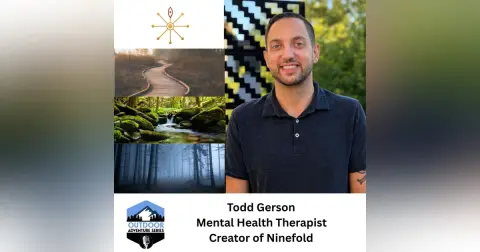
Welcome to another episode of the Outdoor Adventure Series! Today, we're joined by Todd Gerson—mental health therapist and creator of the Ninefold app—for a deep dive into how nature, self-reflection, and technology can work together to enhance our well-being. Todd shares the inspiration behind Ninefold, explains how it empowers users to actively reflect and build healthier practices outdoors, and gives us a guided tour of the app’s features. Whether you’re a therapist, coach, out...
Welcome to another episode of the Outdoor Adventure Series! Today, we're joined by Todd Gerson—mental health therapist and creator of the Ninefold app—for a deep dive into how nature, self-reflection, and technology can work together to enhance our well-being.
Todd shares the inspiration behind Ninefold, explains how it empowers users to actively reflect and build healthier practices outdoors, and gives us a guided tour of the app’s features.
Whether you’re a therapist, coach, outdoor enthusiast, or simply looking to deepen your connection with nature, this episode explores practical ways to use both the outdoors and digital tools to become agents of change in your own life and for those around you. Get ready to rethink your next walk—and how you process it—with insights from Todd and the story of the Ninefold app.
DISCUSSION
1. Introduction to the Podcast and Guest
- Overview of the Outdoor Adventure Series and its focus on exploring and enjoying nature [00:00:06]
- Introduction of Todd Gerson as a mental health therapist and creator of the Ninefold app [00:00:28]
- Purpose of the episode: exploring how nature and apps like Ninefold can promote physical and mental well-being [00:00:33]
2. Todd Gerson’s Background and Inspiration
- Todd’s background as a therapist, education, and experience in mental health settings [00:01:58]
- Work with trauma, anxiety, mood disorders, and life transitions [00:02:24]
- The origin story and inspiration for developing the Ninefold app [00:03:17]
- Personal experiences in nature and with injury [00:03:22]
- Observations about limitations in existing mental health resources [00:03:49]
- The desire for more active, reflective, and personalized practices [00:04:09]
- Developing the app and learning to code [00:05:03]
3. Using the Ninefold App in Nature
- Flexibility in app usage: indoors, outdoors, and while moving or sitting [00:06:27]
- Deliberate design to reduce device engagement and avoid gamification [00:07:02]
- Self-contained activities encouraging users to put the phone down and experience nature [00:07:21]
- Activities rated by intensity and reflection depth to suit user needs [00:07:25]
4. Integration with Outdoor Coaching and Therapy Practices
- Alignment with principles such as forest bathing and outdoor mindfulness [00:08:50]
- Suggestions for therapists and coaches on introducing the app to clients [00:09:12]
- Options for clients to independently explore or work collaboratively with a practitioner [00:09:46]
- Nonlinear and structured exploration within the app's framework [00:10:20]
5. Example Practice: Leaves on the Stream
- Use of nature-based metaphors (leaves floating as negative thoughts) for reflection [00:10:43]
- Applicability for coaching and therapeutic conversations in outdoor settings [00:11:26]
- Positive feedback from practitioners about the accessibility and clinical grounding of app practices [00:12:30]
- Design for users of all backgrounds, not requiring specialist knowledge [00:13:25]
6. Guidance on App Usage and Cadence
- Recommendations for pacing: starting wherever feels natural and building up over time [00:13:40]
- Features for setting reminders and revisiting practices [00:14:26]
- Tailoring frequency and type of activities to individual needs and goals [00:15:01]
- Encouraging meaningful practice and self-reflection rather than prescriptive use [00:16:16]
7. App Tour and Functional Overview
- Onboarding process and overview of the home screen [00:17:01]
- Mandala interface showing progress through different app paths [00:17:17]
- Description of the 8 initial paths and the unlockable 9th, deeper path [00:17:35]
- Selection of activity intensity: light, medium, or deep [00:18:00]
- Overview of specific paths:
- Spirit (values, meaning, goal setting) [00:18:18]
- Persona (roles and masks) [00:18:27]
- Soma (mindfulness, grounding, emotion regulation) [00:18:36]
- Shadow (shame, avoidance) [00:18:48]
- Relational (relationships, boundaries, communication) [00:18:55]
- Light (gratitude, strengths, connection) [00:19:05]
- Inner Script (thought patterns, beliefs, incl. leaves on a stream) [00:19:13]
- Self Within (inner identity) [00:19:21]
- Practice saving and reminders, chronological logging, and narrative timeline features [00:19:54]
- Archive and insights features for reviewing and reflecting on progress [00:20:31]
- Unlocking deeper content with progression [00:21:13]
8. Demonstration of Activities and Reflection Prompts
- Walkthrough of grounding and reflection practices such as 5-4-3-2-1 and box breathing [00:23:12]
- Requirement of user reflection after engaging in a practice [00:24:02]
- Emphasis on reflection as an agent of change and making it a habitual part of well-being routines [00:24:56]
- Built-in prompts and example reflections to support users [00:25:57]
9. Reflections on the App’s Purpose and Impact
- Todd’s personal and professional integration in the app’s design and philosophy [00:27:30]
- Valuing user autonomy, non-pressured growth, and a non-gamified approach [00:28:11]
- App as a culmination of Todd’s views on well-being and growth [00:28:42]
10. Advice for Outdoor Leaders, Teachers, and Families
- The value of using the app to cement and structure outdoor experiences [00:30:34]
- Encouragement to use the app for reflection and to enhance the impact of time spent in nature [00:30:44]
- Resource for encouraging new outdoor experiences in a meaningful way [00:31:05]
12. Closing Thoughts
- Summary of the episode’s discussion and the app’s role in outdoor well-being [00:32:48]
- Encouragement to get outside and use tools for reflection and change [00:34:19]
LEARN MORE
To learn more about Todd and Ninefold, visit the Nionefold website at https://ninefoldapp.com, or on
Instagram: https://www.instagram.com/ninefold.app
LinkedIn: https://www.linkedin.com/in/toddgerson/
RESOURCES:
Outdoor Coaching by Jonathan Passmore and Ellie Lloyd-Jones
Coaching Outdoors by Lesley Roberts
Association of Nature and Forest Therapy
Forest Bathing (Treeming)
NEXT STEPS
Visit us at https://outdooradventureseries.com to like, comment, and share our episodes.
KEYWORDS
Todd Gerson, Ninefold App, Outdoor Coaching, Howard Fox, Outdoor Adventure Series, Podcast Interview
#ToddGerson #Ninefold #OutdoorCoaching #HowardFox #OutdoorAdventureSeries, Podcast Interview
My Favorite Podcast Tools:
- Production by Descript
- Hosting Buzzsprout
- Show Notes by Castmagic
- Website powered by Podpage
- Be a Podcast Guest by PodMatch
- Banner Customization by Nano Banana & Canva
Hello everyone, this is Howard Fox, and welcome back for another episode of the outdoor podcast. Together we're gonna delve into a we can use nature and act like Mindfold, the agents of change to promote our physical and mental health and well-being outdoors. Tom, it's a pleasure to have you on the podcast. Welcome.
SPEAKER_00Thanks for having me, Howard. Appreciate it. Excited.
SPEAKER_02In the past, I have had a number of episodes where we have delved into, you know, the exploration of nature as really a uh a way to promote our our health, whether it's the mental health and physical health. And as a coach myself, I've had the opportunity to have Jonathan Passmore and Ellie Lloyd Jones, who were on the podcast earlier this year, to talk about outdoor coaching. There was a connection between why nature is just so important to us, especially today, when we're so taxed with so many things to do and so little time. And when I got to know Todd and I heard about his application that he was developing, I thought, what a perfect segue to kind of continue and grow this conversation of how nature, mindfulness, mental health is really can all work together. So again, Todd, it's a pleasure to have you on the podcast. And I would love for our listeners, if you could share just a little bit of information about yourself, a little background.
SPEAKER_00I am a therapist. I currently have a practice in outside of Portland in Oregon. I'm originally from Metro Detroit in Michigan. And so I went to the University of Michigan, got my master's there. And I've worked prior to my practice in some different settings in community mental health. I was a crisis therapist in Washington State for a period of time until I eventually made my way to private practice, worked with people with different kinds of backgrounds and focuses with trauma, anxiety, mood disorders, life adjustments, transitions. And yeah, about a year and a half ago or so, I started developing what is now just in the last couple of months out in the world, Ninefold.
SPEAKER_02Okay. Yeah. And was there a moment when you decided, had this epiphany, this insight that there's a need for an app like Ninefold for folks perhaps that I'm working with? I definitely can see it for the types of clients I work with as an executive and leadership coach. But what was that epiphany for you that there's a need here that it's not being filled and I can do it?
SPEAKER_00I think it was a combination of several different things that kind of landed at once. One is my experiences in nature are really valuable in a lot of different ways, depending on different things. It's a place for me to kind of have a release and a catharsis from whatever's going on in life, a place to process things. And so when I started the app, it was also a time where I had a little bit of a back injury and wasn't in nature as so much. And so I was a little bit bounded. And at the same time, and after several years, just in the work that I do, talking with clients that I work with, where they they'd get a benefit from a lot of different resources that are out there that are great mindfulness apps, journals, books, resources, but also there's limitations to those things. There's a lot of passive consumption, for example, where you're just listening to something passively, and then people are going about their time. There is this active piece of reflection and practicing things that a lot of the resources out there just didn't have. And so there would be activities or kind of practices that I would kind of create or borrow from different frameworks over time. And I had this idea like let's see if there is something out there like that, because I wasn't aware of anything, and nothing quite comprehensive out there that met that need for more active work. That was also meeting people where they're at, depending on what they needed, whether it be reflection or specific focus that they wanted to work on. And so it just started with an idea that it kind of pulled at, and all of a sudden I had all these practices, and all of a sudden here I am learning how to code, and it evolved over time to become it became what it was.
SPEAKER_02As I have been getting to know the app, and in the spirit of full disclosure here in southern Nevada and Boulder City, I think we topped out at 102 degrees today. Yeah. So I'm not going out for a hike anytime soon, at least the next couple of weeks. But I love sitting outside in the morning. It's quiet. We are literally on a portion of the southern of the flyway for the bird migration. I've got hummingbirds all over the place right now. And I love just sitting outside and listening to the hummingbirds, hopefully seeing them at the couple feeders that are in my neighbor's apartments. And I was sitting there with the app using it in that moment. And I started to wonder, and I know you shared that the idea behind this app, and really I think benefit for everybody, is put your phone down. Stop scrolling through because it Facebook and Instagram and Twitter and all those things. But I was curious too, with an app like this, can I use it here, like where I am at right now, sitting outside? Or can I understand and learn an app like this, but then apply the points that are being introduced to me out in nature when I am going to go take that walk? Because I was curious then, if I'm on that walk, am I going to go find a place to sit on a rock next to a tree and start to use the app? Because then it's now I'm I'm moving myself away from nature to fill out this app.
SPEAKER_00I think it's a both and and bor by intention, because this is another thing that I did on purpose when building this app, is it is meant to put away. A lot of apps have streaks or gamification where they want to keep you on your device. And so I purposely avoided all of that. And the way that the activities, for example, are designed is they're very, very self-contained. There's even a way they're rated in level of intensity. So it's, oh, I I don't won't want to do any deep reflection right now and sit on my phone. You can kind of pick an activity that meets that level of reflection and the time and energy you want to put into it. So I think I designed it for somebody in a situation like yourself, as you're describing, where you're reflecting outside in the morning. And then it's also designed where, okay, let's go put this in my pocket and go experience nature. The thing that I really appreciate as I kind of designed it too is that well, like I was just saying, the self-contained piece where you can do an activity and it a lot of them encourage you to put the phone down as well, not just in the way they're designed and the kind of contained structure of them, but they're encouraging to go experience things. Even the reflective pieces are encouraging to take those reflections, apply those insights, and go in the world and do it, whether it be in nature or otherwise.
SPEAKER_02Okay. In the the the studying, and and I am by no means an expert at all. I'm starting to learn about what it means to provide outdoor coaching. And and I heard a term recently was called forest bathing. Is that is that familiar? Okay, you shape so that's familiar to you. And and I think the idea of just getting out into nature, taking your shoes off on the path, on the sand and the water is so important. And I I was also curious, can I use an app like this as I download it? And for our listeners, we're going to provide a link to the app. It's very nominally priced, and so we'll have links to it in our show notes. But as I use this app, it would it be a reasonable suggestion that say, like a trained therapist like yourself or a coach like myself, as we introduce it to our clients, to let them pick out the areas they want to work on, how can I incorporate that, say like in the outdoor space, or are we working on it together?
SPEAKER_00I think it also can go both ways. Okay. And so depending on what somebody is interested in kind of exploring or pract a practice that is tied to something, somebody can go engage with the app, reflect, practice something, and then there's ways to share that with a coach or with a therapist, and then work through those insights or those practices and learnings from them. And it can go the opposite way where a coach or a therapist who has an idea of you know what could be valuable or helpful for their client or somebody that they're working with, make suggestions on where to go. And that's something I like about the I call it, like I said, structured, but it's nonlinear, is you kind of pick and explore where you're at, and you can get guidance from somebody else to navigate it as well.
SPEAKER_02And by the way, I have to share as I was preparing the show notes and reading the questionnaire, you had mentioned that the leaves on this uh on a stream practice, and I love that because there's a a there's a uh it was a National Wildlife Refuge. It's it's now an hour away, used to be like 20 minutes away. But it's wonderful. And but there was a there's a stream up there, so at the water underground is being fed into the stream in the desert. I mean, it's it's hot, but the stream still is alive. And I love just hanging out on this bridge that crosses the stream and just watch the leaf or the bubbles just kind of float on by. And as a metaphor in my coaching practice, imagine a stick on the stream, and you know, you have this negative thought, or you're you're struggling with something, and then what's happening to that stick? It's it's floating by. So what was once something you were deeply concerned with, it's gone. You don't have to worry about it anymore. And I love the fact that I can take a client out to the National Wildlife Refuge, go for a nice walk. It's not that taxing, but just hang out at the stream and continue that conversation of how are they feeling? What are some of the challenges they want to work on? And so when I saw that practice, I thought that that's definitely something that I would do in addition, just sitting on the benches that are along the this trail. I think it's like ends up being like a three-quarter of a mile trail with benches spread periodically, and it just sit there, relax, and observe what's going on around you. How are you feeling? And you have the the leaves, the clouds, the birds, and it's it's just all there. All you have to do is just slow down and wait for it. What's been the reaction to the app and people getting used to using it on your introduction with it? What's been their reaction?
SPEAKER_00I got a lot of really great feedback so far. A lot of therapists that I've been connecting with, getting feedback. It's kind of been really what I'd hoped for at this point, where people are kind of slowly exploring it and getting to understand it and kind of almost like building a relationship. But really, it's it's almost in many ways because it's not it's asking questions of people. It's kind of a a different way to build a relationship with yourself, is how I kind of think about it too. And so people are really getting a lot of great feedback and getting really good ideas for future features and things like that. Therapist liking how I've used different frameworks and insights. And as you're talking about that practice with the leaves on the stream, right? A therapist might look in that and say, Oh, I know what you're doing there, I know what framework you're using, but that's really written in a way for anybody. You don't have to be a therapist or a coach to understand the value in that practice and know the clinical jargon that goes behind it. So so far, a little uh really great feedback.
SPEAKER_02Okay. Is there a recommended cadence for using not only the app itself, but the various practices? And and I do again, you also repeated, you can start wherever it is that you want to start. But is there, you know, how do you I guess it's kind of like how do you run a marathon? You don't start off and run 26 miles. You've got to work your way up to it. So, what are some of the ways you work uh with your clients to say what to work up to using an app like this? And so it makes it a part of their daily practice, so to speak.
SPEAKER_00Yeah. And again, I'll give a specific example, but kind of vague. It depends, right? I get so one feature of the app that will help answer this is if somebody, whether they have a suggestion from a therapist or a coach, or just on their own, finds a practice or an exercise in the app valuable, there's ways to set reminders, right? Where the app isn't reminding you by itself to go and do specific things, it's very self-paced. So you can set reminders to get notifications or just have past insights from past activities and reflections sent to you as a notification as a reminder as well. And so an example is if there's a specific area or certain practices a client is interested in, or the IC being really valuable to them, I can suggest those specific practices, specific, there's a module, right? There's paths, and within the path, there's modules, and within the modules, there's specific activities. And so I can look at a module and say, hey, I think it'd be really valuable for you to kind of once a week or at whatever cadence I think might be valuable to kind of practice these things or explore this a little bit, and then we can come back, take a look and see what has been valuable or what has come up for you.
SPEAKER_02Okay. You know, I'm wondering as a coach, the challenge that I would face is because we we don't tell people, we don't tell our clients what to do. You know, we say this is what's available to you, you know, and then we kind of go through like a decision tree, what resonates. Okay, well, what if you you have options? What uh what which ones of those options appeal most to you? Because at the end of the day, you know, we we want those beh those new behaviors, those, those, those slowing down, take in nature, enjoy it, realize what's going on around you, perhaps solve some issues that you're you're kind of navigating through, but also to you know make sure these practices are are meaningful for you. So a little different mindset from as a therapist to a coach, but at the end of the day, we we want our our clients to to work with the tool and to get benefit from it. You know, I would love if we could spend a little time and this today you're gonna navigate for me because I couldn't get it the tech going, but I would love if we could share a little bit about Ninefold App and just uh let's let's introduce our listeners to it. Yeah, sure. Give a little tour. All right, it looks like it's working. I think that maybe no, I can see it. Look at that.
SPEAKER_00So that's the home screen here. This is just a Tus account. When somebody first downloads it, there's a really quick onboarding that can kind of give some first guidance towards a first activity, depending on where somebody's interested in exploring. And so on the home page, there's this mandala. As you complete modules, it's kind of nice light engagement. The different branches of this mandala here fill in with design and with color. And so you can see on the Sessicon, one little branch has been filled so far. And even though you can see that the app's called ninefold, there's only eight paths here, and that's because there's one more deeper path. We can kind of preview a little bit, but unlocks that you've completed some paths because it's a kind of a deeper path. If you click the center after completing a couple activities, you can click the center and then it'll make a suggestion for you based off how deep you feel like going that day. So you could pick light, medium, deep, and then right, then you can it's suggested activity and you could go from there. If you go down here to pass, is another way to enter these. You can click on each of these eight initial paths, and it'll kind of give a brief description. So the spirit path is things really tied to values, meaning, goal setting, things like that. We've got a persona path which has to do with roles and maths, things of that nature, and reflections and activities based there. I think the somatic path, I call it soma path, ties into nature. There's a lot of mindfulness, grounding, emotion regulation practices and exercises in that one. The shadow path here has to do with topics that can be a little more challenging around shame and avoidance. We have a relational path down here to explore things around relationships, boundaries, communications, different relational dynamics, light path, things around gratitude, strengths, kind of celebrating connections. And this is where that activity you were talking about earlier is in here with leaves on a stream, but thought patterns, belief systems, different activities, reflections there. And then the self within has to do with more of inner identity and and and roles within ourselves. There's this practice page here. You can see, as I was saying earlier, too, if I if there's a practice that I wanted to repeat, I can save it as a practice, and then set a reminder how often I want to be reminded to engage in that practice. And then let's see, there's an additional feature which I don't talk about too much called timeline. And it's just a timeline. And so you can log events and make reflections. So there's a chronological view. So you could click here, right? Make a note of an event that you're reflecting on. There's a narrative view where you can almost organize it like chapters in your life in a future timeline. And there's actually specific activities too that actually pull those moments that you log in a timeline where you can actually reflect on those moments as well, and it'll pull the moments into the activities. And then the other features here have this open is path archive. So if you complete a whole path of activities, it unlocks a path archive that summarizes the reflections and key themes within a path. It'll highlight patterns. It's all logic-based, so there's no AI that's summarizing these features at all. It's just basically packaging all your reflections from a specific path into the archive. And it has some kind of insight, gathered kind of summarized insights from the entire path as well. This is another way for more reflective type of activities. If you wanted to be reminded of past reflections, you could save it as an insight. And up here'll save the insight. And then the root system, that's the the ninth path. And you have to unlock to unlock one module of the root system path. You have to complete four paths, and then each module unlocks after. So that takes a while to get to, but it it's uh we'll call it a much deeper path. So that is what the app looks like. Happy to to go into an activity or any questions you may have to.
SPEAKER_02Let's go through the leaves on the stream just as an example. Yeah.
SPEAKER_00So I'm pretty sure is underneath the activities here. Pretty sure that one is in the inner script path, and I believe it's in here. And so there's so many different kinds of activities. I I believe it's here. These ones are where the the leaves on a stream one is probably one. That I would call more of an initially passive activity, but then there's still a reflective piece involved there.
SPEAKER_02What we can also do, Todd, is the one path that would be very well aligned for like being out in nature and just noticing what's around you and how you're feeling in the moment.
SPEAKER_00Yeah, there's leaves on a stream. We can come back to that. Yeah. I don't think your listeners want to sit for five minutes and necessarily engage in that way. I think the somatic path would be a good one to go through. Okay.
SPEAKER_02There's so many places to jump in here. And I'm thinking it could be, you know, a manager with one of their employees, it could be, you know, a parent walking with their kids on a trail and just, hey, how's your, you know, how's your week going? What, you know, because remember when you're growing up, mom and dad used to say, What did you learn in school today? Or, you know, why did you do this? Why'd you do that? But at least like out on the path, taking a bike ride, going fishing, and just being one with nature and just having those conversations.
SPEAKER_00It's wonderful. So we can go here, perhaps.
SPEAKER_01Okay.
SPEAKER_00So there's a couple activities here. Grounding inventory has different practices where kind of talks about suggests different things that you could which you could do in nature. You could kind of do anywhere that could be grounding and regulating. And you build your own inventory of things that you would like. Yep, yep. That's a pretty good one. So you could select you'll select three. Five, four, three, two, one is a very popular grounding exercise where it's five things you can see, four things you can feel, three things you can hear, two things you can smell, and then I just tell people describe the taste in your mouth. And so that's a popular one. And then so it has a list of different suggested ones, and you can just create your own as well, right?
SPEAKER_02Very cool.
SPEAKER_00It will guide you through the different practices, and then you can say, Yes, I I practice this, and then it would require a reflection, which is I think a one of the things I was saying earlier is it's different from other resources and apps where it's actually asking you to reflect on your experience in all of these, even with the practices, not just more reflective type activities. And so we can just put fill that.
SPEAKER_02I will admit for myself that reflection period. I know I don't give it as much chance for myself and the benefit from it, but but I know how important it is after an event or going out on the trail, doing a one of these practices, and how do you feel? And just getting them used, getting your client used to going through that activity so it becomes a part of their wiring for the future, because that's integral, at least in the coaching practice, is reflecting on how that you do, but getting used to reflecting. So you use that as an as an agent of change. Very good. Absolutely.
SPEAKER_00Well, I'm well, yeah. Yeah, we'll just go. I'll show you real. We'll just fill this in. Okay. Just so then that you have you would do some further reflection. Okay, can you go back for one sec? Yeah, sure.
SPEAKER_02Go back one more. So notice okay, now go back, go forward. Okay. And then it was the words inside the box that I wanted to just draw attention to.
SPEAKER_01Yeah.
SPEAKER_02Okay, so describe anything you noticed or felt. And that so I love the fact that you gave the user the prompt to do that. Yeah. That was important.
SPEAKER_00Yeah, a lot of the activities in when you're reflecting have that kind of suggestive text, and a lot of activities, I would say maybe two-thirds or more with the reflections, even have suggested examples that you can click a little link, and I'll give you examples, right? If somebody kind of doesn't know where to start with this reflection and whatever they're doing. So very good.
SPEAKER_02Well, thank you for sharing the app. And again, I'm excited. I just think you know, as a coach and and really helping clients get out into nature and seeing how nature can be an agent of change in people's lives, and then having this app as an additional tool to help be a part of that change. I definitely see the interconnections here. So that's Todd, that's why I was really excited to have you on the podcast and share more about this app. So thank you for taking us on that tour.
SPEAKER_00Yeah, thank you. Let me take you on that tour.
SPEAKER_02All right. So I got a question. I mean, you you've been in practice for how long now?
SPEAKER_00Been a therapist for about a decade. Okay.
SPEAKER_02So with this app, which is which is brand new, what's been your aha moment as you kind of look back and you see this journey you've been on? And now this app is a wonderful tool. And I can I see it, how you use it in your practice, but for yourself, what's been that aha moment? It's been interesting.
SPEAKER_00I feel like the app is this integration of personally and professionally, just how I think about well-being, growth. And it's not necessarily the specific types of activities or the specific frameworks, psychological and philosophical frameworks. It's just more of the different ways that I organized it, where I really am a proponent, kind of as your same coaching goes, of people kind of being in charge of their own journey and path. And so I wanted to have people have this autonomy to decide what's meaningful to them, what they want to focus on, and be able to have a resource that provides that and in a non-kind of pressured gamified way. And I think that this app and how I think about it and how I designed it really reflects how I think about not just therapy or coaching, but just growth in general. So I'm pretty proud of that. And I think I feel like it's a culmination of how I think about these things and just providing a resource for people that to access it in a way that makes sense for them. Was my aha moment in that click click that okay, there's not much that I can find that really does this in this comprehensive way in how I'm trying to approach it that I've found.
SPEAKER_02Okay, okay. What would you want to share with my audience? So it it could comprise clients that I'm coaching. I as an outdoor journalist, as a podcaster, and peers with hikers, bikers, anglers, hunters, a lot of people doing a lot of crazy stuff in the outdoor space. And many of them have this opportunity to take others out and share or introduce them. Oftentimes it's kids. Oftentimes it's people who maybe never even thought they could go camping outside. And because they're from the inner city, and now I'm gonna take you up to the go for a camping in Death Valley once it cools down a little bit. Would you want to share with my audience about why an app like this could help them be an agent for change for the people they're working with, those kids, adults?
SPEAKER_00I think what I'd want them to, because I'm a lover of the outdoors as well, and I I can think for myself, my time in nature, like as I was saying earlier too, it provides so much valuable things to me. And but some of that doesn't kind of doesn't become permanent. And it's it can be sometimes there's value in having something to kind of record and have a little bit of structure that goes along with that, but that's not keeping you on a screen at the same time. But I think what I would share with your audience is one thing that this resource, this app could be helpful with is being able to kind of cement their experiences that they have in the outdoors and vice versa, encourage some new experiences in the outdoors and in nature and in a meaningful, purposeful way.
SPEAKER_02Very good. I appreciate that. Now, just a reminder for our listeners if they would like to learn more about the Ninefold app and any social sites that you are active on that's talking about your work in the app, where are the best places to go?
SPEAKER_00I've got a website, it's ninefoldapp.com. There's uh Instagram, it's ninefold.app. I'm also on LinkedIn, so people can look me up on LinkedIn as well.
SPEAKER_02Okay, okay. Well, we're gonna provide all of the backlinks in our show notes and look forward to sharing this app uh with our uh listeners. And I as I continue to delve into this idea of coaching and nature and getting people outdoors, listening to birds, watching the leaf go down the stream, or just having as a friend of mine who is uh executive director at Red Rock National Conservation Area, she called them walk talks. You just go walking and you talk. Walk talks. I love that. And I just I mean, it's the idea that this is just a great tool that that continue that message and that growth about why there's a why we need to get outside and enjoy nature, but now we have a tool that we can use to reflect on the change that's happening in our lives. So I really again thank you so much for joining me on the podcast and really sharing this wonderful tool. You've you've got me sold and look forward to sharing it with our my many listeners. So thanks again for your time today, Todd. Thank you, Howard. Appreciate it. All right. Listen, stay in the line. We're gonna do a real quick close, and you and I can have a final chat, okay? Okay. All right, folks. We've just been chatting with Todd Gerson. He is a mental health therapist and the creator of the Ninefold app. And really excited to continue this conversation because it's from my vantage point, nature, mental health, giving folks that perhaps never have been out on the trail before. Or they're I'm thinking inner cities, I'm thinking communities that just don't have the resources to take their kids out and learn how to fish or hike or bike. And it's about getting folks comfortable with nature and really also helping them in their lives and realize that you know nature can be a resource for them when life is just you know getting kind of tough. And but get out there in nature, enjoy, learn some new skills, and tools like this, the Ninefold app can be very beneficial for them as they kind of embark on their journey. And I think for myself as a professional coach, I can use this for my own clients as we go out into nature and explore, but also being mindful of what's around us and really to reflect on the impact nature is having on some of the issues that we are navigating. So this confluence of coaching and nature and good health, emotional good health, I think is really very profound. So I hope you enjoyed today's episode, and we're very grateful that Todd was able to take the time to join us and take us on a tour of the app and the miracle of technology. We were able to accomplish that. Now we are going to provide backlinks to Todd's website, ninefoldapp.com, and we'll provide links back to his Instagram page and also to his LinkedIn page. As for us, you can find this episode on our website, outdooradventureseries.com. We're also on LinkedIn and Facebook on our Outdoor Adventure Series pages. The video of this episode will be up on our YouTube channel, which again will include the navigation of the app. And of course, you can listen to this podcast wherever you get your podcast from. So wherever you are, whatever you're doing, go out there and have a fantastic day. And we look forward to having you join us on the future episode of the Outdoor Adventure Series Podcast. Take care now.