


 Apple Podcasts
 Spotify
 Amazon Music
 YouTube
 Castro
 RSS Feed
 Protecting Midwest Flyways and Local Habitats with the Southern Wisconsin Bird Alliance
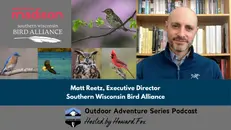
Protecting Midwest Flyways and Local Habitats with the Southern Wisconsin Bird Alliance - Welcome to another episode of the Outdoor Adventure Series! In today’s episode, we’re joined by Matt Reetz, Executive Director of the Southern Wisconsin Bird Alliance. Sponsored by Destination Madison—host of the 2026 Outdoor Writers Association of America annual conference—we’re shining a spotlight on why Madison, Wisconsin, and the surrounding Dane County communities are such exceptional destinations for outdoor enthusiasts, family getaways, and nature lovers alike.
Protecting Midwest Flyways and Local Habitats with the Southern Wisconsin Bird Alliance - Welcome to another episode of the Outdoor Adventure Series! In today’s episode, we’re joined by Matt Reetz, Executive Director of the Southern Wisconsin Bird Alliance. Sponsored by Destination Madison—host of the 2026 Outdoor Writers Association of America annual conference—we’re shining a spotlight on why Madison, Wisconsin, and the surrounding Dane County communities are such exceptional destinations for outdoor enthusiasts, family getaways, and nature lovers alike.
Matt shares insights into the Alliance’s long-standing history of bird conservation, education, and community engagement, tracing its roots back to the 1930s and detailing how it has grown into a regional leader. Discover the joy of birding, the importance of protecting our feathered friends, and the many ways the next generation is being inspired to connect with nature. Plus, get a behind-the-scenes tour of the Alliance’s diverse programs, wildlife sanctuaries, and educational resources—perfect for anyone planning a trip to Madison or looking to get involved in local conservation efforts.
So grab your binoculars and join us as we explore the wonders of southern Wisconsin’s outdoor adventures and the vital role of birds and their habitats in our communities!
DISCUSSION
00:00 Evolution of Madison Birding Club
05:33 Making birding accessible for everyone
08:52 Environmental education and outreach in Wisconsin
14:07 Seeing kids excited about birds
15:20 Inspiring underserved kids through nature
20:17 Exploring our website resources
23:41 Land conservation and wildlife sanctuaries
25:04 Upcoming OWAA event plans
30:21 Planning birding activities in Madison
33:00 Discussing the impact on kids
34:40 Getting into birdwatching
39:30 Staying connected
MEDIA
Bird declines have been significant since 1970. There are many reasons and many potential ways to help. https://www.birds.cornell.edu/home/bring-birds-back
https://www.wkow.com/news/lights-out-wisconsin-works-to-reduce-light-pollution-and-help-bird-migration/article_64420fdb-c139-4dd5-a903-931b5767aa7b.html
https://www.wpr.org/nature/tips-birding-spring-matt-reetz
https://swibirds.org/bird-nature-blog
LEARN MORE
Website: https://swibirds.org/
Facebook: http://facebook.com/swibirds/
Instagram: http://instagram.com/swibirds
YouTube: https://www.youtube.com/@SWiBirds
Podcast: https://open.spotify.com/show/3MvIS8MbZ1otvW8GRVzMLL?si=1006a356e28246b0
Destination Madison: https://www.visitmadison.com/
NEXT STEPS
Visit us at https://outdooradventureseries.com to like, comment, and share our episodes.
KEYWORDS
Matthew Reetz, Southern Wisconsin Bird Alliance, SoWBA, Destination Madison, Outdoor Adventure Series, Podcast Interview, OWAA
#MatthewReetz #SouthernWisconsinBirdAlliance #SoWBA #DestinationMadison #OutdoorAdventureSeries #PodcastInterview #OWAA #OWAA2026
My Favorite Podcast Tools:
- Production by Descript
- Hosting Buzzsprout
- Show Notes by Castmagic
- Website powered by Podpage
- Be a Podcast Guest by PodMatch
- Banner Customization by Nano Banana & Canva
Howard Fox [00:00:07]:
And welcome back for another episode of the outdoor adventure series. Today's episode is sponsored by Destination Madison, the Host of the 2026 Outdoor Writers association of America's annual conference. During today's episode, we hope to share with you why Madison, Wisconsin and the surrounding communities in Dane county are the perfect destination for family vacations, couples getaways, outdoor adventures, meetings, conferences and conventions. Our guest today is Matt Reitz. He is the executive director of the Southern Wisconsin Bird Alliance. Matt, it's a pleasure to have you on the podcast. Welcome.
Matt Reetz [00:00:50]:
Thanks, Howard. I'm really excited to be here.
Howard Fox [00:00:52]:
Fantastic. Now, first off, I have to just acknowledge you with my official podcast Birding Cup. So cheers to you, beautiful northern cardinal.
Matt Reetz [00:01:02]:
Yeah, excellent.
Howard Fox [00:01:03]:
I have to say. So I live in Nevada, actually, I should technically say I live in Boulder City, which is official as of last week, but home of the Hoover Dam. I have to say that when you're a resident of Boulder City, I moved from the Midwest and the one thing I miss the most is the northern cardinal. I. The sounds. And especially when the weather is just starting to change. It's cold outside, it's summer or springtime is right around the corner and then the cardinal starts to chirp away and that is like this. I think that's the sound I missed the most from when I made that move.
Howard Fox [00:01:43]:
But so I was excited to have that mug, but.
Matt Reetz [00:01:46]:
Oh, you picked a good one. Northern cardinals are amazing. They look, they're basically a tropical looking bird that lives in North America. If you take them, if you look at a cardinal with fresh eyes, with that bright plumage in the crest, it's, it's basically a tropical bird. And there's a reason why it's the state bird of seven states.
Howard Fox [00:02:05]:
That is, it's amazing and it's, and I'm excited when I get to Madison later on this summer is just to get out into a nice park. And just as a friend of mine, Bridget would describe as slow birding, just sit there, relax, have a beverage and just listen to the birds. I just love looking forward to that. So first off, Matt, let's talk about the Southern Wisconsin Bird Alliance. How long has this organization been around and as an executive director, how are you shepherding them through really some interesting times around conservation and why it's so important, especially in an area like the southern Wisconsin and the Madison area?
Matt Reetz [00:02:53]:
Well, I, so we're, we started out as the Madison Bird club in the 1930s, 1935, and really just sort of just a group of people enjoyed getting together and going Birding and thinking about bird issues. And we've evolved into our own 501c3, a nonprofit organization. We were, we were called the Madison Audubon for some time until we changed our name recently. And so we are now we're a chapter of the National Audubon. But we are our own separate organization that has grown into one of the regional leaders in bird conservation through advocacy, education and land protection. And so I feel like I, I hit the jackpot in terms of a job because I get to work on what I think is really important, but also really share the joys of birds. Conservation is a really important serious business. But we also say we're in the joy business because protecting and celebrating birds means really great things for our communities and the environment.
Matt Reetz [00:03:56]:
And so it's a privilege for me to be able to work on their conservation. And the wonderful thing about birds too is that if you protect birds, you take care of problems with birds, you're taking care of a lot of conservation issues and environmental issues. So, and that's really how we approach our work. There are, there are threats to birds that have existed for a long time. We've lost 3 billion birds since the 1970s, which is, is, is unbelievable.
Howard Fox [00:04:22]:
Staggering.
Matt Reetz [00:04:23]:
Yeah. And there's bird declines, significant bird declines in lots of different groups, including common species like red winged blackbirds that have declined significantly. Even though there's, there's a lot of them, they're really on the deep decline. So our, our goal is to share the joys and the importance of birds and nature with everyone because nature needs everybody. We need everybody to, to understand that these, that birds really matter, that the fate of birds is really tied to our own. So. Well, for protecting birds, we're doing a great job of taking care of ourselves too.
Howard Fox [00:04:56]:
Okay. The programming that takes place in southern Wisconsin, the education, the conservancy, and just again, spreading that joy. How are the folks who are interested, or maybe they're newly interested, maybe they saw a movie or they saw, that's a cool bird, I want to learn more about it. And now they're off and running. What are some of the programs that this organization has that is not only promoting the conservation but also the education and just the pure joy of it all?
Matt Reetz [00:05:33]:
Yeah, I mean, first of all, birds are birds and birding and being outside, that's for everybody. And it is, it is not just for the, the elite birders with their high end gear who are spending hours out in the field, it's for everybody. Every single person can enjoy birds and you can do it in your own way. You can get really serious about it if you want, and learn how to identify all the plumage variations of all the warblers and the sandpipers that skittle along the mud flats. Or you can just walk out your door and look up and enjoy what a cardinal is doing in a tree and listen to its songs. And there's lots of ways that people can get involved in. In that. So for us, it's really important to really bring that sort of education side of it, but also opportunities.
Matt Reetz [00:06:21]:
So we have tons of field trips that are available to the public that are free. You can come on out. And there are various levels, abilities, access. So we want everybody to be involved in this in ways that they feel comfortable in. There's also really lovely, excuse me. Apps and things that really have evolved over the years that really open up birding to people. I recommend highly inaturalist and Seek and especially Merlin. Merlin is a great app for.
Matt Reetz [00:06:52]:
I mean, it identifies stuff for you. So you just click it open and hit the record button and it's telling you everything that's singing around you, which is just mind blowing. It's incredible. So, yeah, you. And you mentioned slow birding. That's a one fabulous way to bird. You just sit there, enjoy life, enjoy the sounds around you. And that's also another way to enjoy birding too.
Matt Reetz [00:07:15]:
So we do education in both kind of informal and formal ways. We have, like I mentioned, a bunch of different events. We have a very active citizen science program. They can community outreach program for different projects like ball monitoring bald eagles and American kestrel nests and bird collisions even. But we also do formal education through classes, adult education classes on how to bird and how to mix art with nature. Howard, I'm just about to get a train that's going right by.
Howard Fox [00:07:56]:
When I lived in Chicago, I was on Michigan Avenue and my bike would literally pick up everything. And I always described it as a feature when the ambulance went down, but I can't hear it, by the way.
Matt Reetz [00:08:10]:
Oh, no, that's okay. Yeah, and that's the one thing about birding too, is you can use both your. The sight and sound. Here's my train. I'm on mute for a second because it's quite loud.
Howard Fox [00:08:21]:
Okay,
Matt Reetz [00:08:32]:
Okay. Well, you'll hear it a little bit here as it fades away.
Howard Fox [00:08:35]:
No worries. We should have notified the BNSF or Amtrak or whoever's going by. Hey, look, guys, we're doing a podcast. Can you, like, slow down a little bit?
Matt Reetz [00:08:45]:
That's right.
Howard Fox [00:08:47]:
Which actually begs the Question. Where you're in, is your office in Madison?
Matt Reetz [00:08:52]:
Yeah, our office is in Madison. It's sort of our central hub. But we, we work throughout southern Wisconsin where we have, our citizen science program reaches, I think it's 38 counties in Southern Wisconsin and into the Fox Valley where our Baldi, or excuse me, Osprey program is all throughout southern Wisconsin. We run field trips throughout southern Wisconsin. We also have four wildlife sanctuaries in four counties here that are, that are represent 3,000 acres of protected and restored habitat. So, and I just remember that my train of thought, no, no pun intended, was interrupted by the train. I was mentioning our formal education, so I mentioned adult education classes and we do speaker series and things like that. But I also want to emphasize that we have a very rigorous youth education program that works with schools and community centers in the Madison area that brings really high level, teacher tested, kid tested outdoor education to young people, particularly middle school, elementary school kids.
Matt Reetz [00:09:55]:
And we visit the same kids, it's free to these, these community centers and schools that we work with. And it's repetitive. We go back to the same kids, the same classrooms, and we provide curriculum over maybe 12 weeks. And so the kids get a chance to, we get the chance to learn their styles, what they like, and give them an opportunity to build trust. And so it's really exciting to see the relationships blossom with the kids and them to get really excited about nature.
Howard Fox [00:10:25]:
I love that. I was reading Trish o' Kane's book and Trish was a guest on the podcast earlier this spring. Her book was Burning to Change the World. And as they were working very closely with Warner park, which is, I guess it was economically one of the economically depressed areas at the time, but all this change that was going on and this idea of getting kids involved, the local schools and having them go out with the students and just developing those relationships and learning about nature and being out there. And it was cool to read about certain kids. I mean, every kid's different. And there's, there's also certain developmental disabilities, social functions that are. Maybe everybody's a little different, but everybody latches on something that's special.
Howard Fox [00:11:20]:
Like, I love, I love, I love raptors. I especially love owls. And by the way, I don't. I've only seen an owl in captivity. I've never seen an owl out in nature.
Matt Reetz [00:11:33]:
Howard, we got to fix that.
Howard Fox [00:11:35]:
We gotta fix that. Yeah, I just, I was thinking about it the other day as I was preparing for doing some pre podcast planning and like, I have got to see an owl.
Matt Reetz [00:11:49]:
Yeah, we realize, well, if you come to Madison, we can find you an owl. We've got, we've got a really healthy populations of Great Horned and Barred Owls and Screech Owls and we even get eruptions of Snowy Owls in here. But you won't be here at the right time that they're a winter bird. So yeah, we're, and we have, yeah, we've got, yeah, it's a great, great owl populations here. So hopefully we can, we can get you now live owl.
Howard Fox [00:12:13]:
I love it. I love it.
Matt Reetz [00:12:15]:
Yeah. And you mentioned kids, by the way. I just want to just really quickly say that, you know, the youth education, nature education is really important for kids and I'm going to, I'm gonna make myself sound old, but kids these days, they just don't go outside like they used to. When I was a kid, I got kicked out of the house and then whistled home for dinner and we'd be, we'd be coming back dirty and bugs we collected and whatnot. And, and it's a different age now. So electronics are really keeping kids inside. So it's really important to get kids outside. Not only because, because for a variety of reasons they really benefit from it.
Matt Reetz [00:12:50]:
There's, there's all sorts of research studies that show that it's tied to emotional health, mental well being, physical health, academic performance, all sorts of positive things about being outside and enjoying nature. And the other thing is that you and I are older and the, there's a lot of folks at our age that care about nature, but we really need the younger generations to care about nature if the work we're doing now is to continue on. So nature needs young people.
Howard Fox [00:13:16]:
So I think you are spot on. And just the idea of walking away from the computer, I know I've never done video games in my life, but, but I know it like that. It's just, but just to get outside and just walk, put your feet on the ground or listen or smell look and just kind of, it just, it trains the senses to appreciate what's around.
Matt Reetz [00:13:42]:
Absolutely, yeah. And it's really lovely for us to see sort of that really awaken in a young person when they're initially really. They don't want to touch anything. They want, they don't want to be outside in the first few lessons that we do. And later on they're the first ones out the door and they're, they're diving in and they want to experience everything which is, it's really gratifying to know you've opened up that world to somebody.
Howard Fox [00:14:07]:
Sure. I'm curious. It's kind of in our podcast I have segments called the Aha Moment and we'll talk about that a little bit later. But the segment is about when you realize what you are doing as a job, a vocation, a hobby really meant something to you, why it was so important. And I'm so curious right now, off the cuff when, when you've hit you or maybe one of your volunteers have gone out and they're working with a group of kids and so you've interacted with them and they're, they're all of a sudden they're, they've changed, they're wide eyed, they're smiling, they're excited. What was it like when you first saw that type of reaction to this activity of just learning more about the birds around them?
Matt Reetz [00:14:59]:
Well, I mean, I gosh, I mean it makes your heart sing. Sing like a bird, I guess. Or I'll use a number of metaphors. It makes it fly. Yeah, I mean there, I mean there's been a couple of really interesting, I mean this happens all the time. But I, I, our educators who are incredible. We have two educators here that are just incredible. They're so good at working with kids.
Matt Reetz [00:15:20]:
They're so inspiring. They're really good at working with teachers and coming up with creative and very good lessons and, and really learning from the kids too about what, what resonates with them. But we hear these stories about kids who are, they're particularly our, our under, our, our education program serves underserved or underrepresented communities. So the school, the community centers are at least 50% kids of color or low income. So these are kids who can, who don't have access to this kind of nature education usually. So it's just amazing to see both the images and the stories of kids that are initially really, really reluctant to participate in, in nature, in nature education that are transformed in the end and they're, they want to touch everything. And we had a kid who didn't want to be involved in anything and then later on is that he wanted to take all his owl pellets home. And I don't know if you wanted, we would have let that happen because there's a bunch of mice bones and things in there.
Matt Reetz [00:16:24]:
So I don't think the parents would be super excited about that. But it was great to see the chance. It was great to see the transformation and see the kids. We love these, we love what the educators call ew moments where they're like grossed out. So with touching something and then later on you see them do. Engaged in it. And all of our adolescents are safe. They're all, they're all.
Matt Reetz [00:16:48]:
They're super safe for kids. They're all, they're all tested and. But we just love that transformation. And you can see it in the photos, too. These sort of just changes in the kids. And we also really want to show them that you don't have to go to a national park to enjoy nature. You just got to go outside. You got to walk out the door and nature's right there.
Matt Reetz [00:17:08]:
It's there in your. It's there right outside their school. It's right there. And they oftentimes just haven't seen it. That hasn't. That world hasn't been open to them. So you can enjoy nature in. In places where they feel safe and it's all.
Matt Reetz [00:17:20]:
And nature's all around them.
Howard Fox [00:17:22]:
I love that. And Madison. I've had the pleasure of visiting Madison a couple times, and I have to admit, I never knew it was situated on an isthmus. I mean, I just. All I saw was land. I never knew there was the lakes around. But you've got inland parks. You've got the water foul.
Howard Fox [00:17:42]:
You've got the birds that hang out on the water and then the reeds that are on the water. So different, different times, types of animals, different types of birds. And. And like you say, you walk outside the door. Like this morning I was sitting outside with my cup of coffee and you mentioned the Merlin app. I'm always listening with the Merlin app. Okay, who's around? Usually it's the big three, the dove, the mockingbird. And there's.
Howard Fox [00:18:11]:
I think it's a junko is around right now or. No, a verdin. A verdin is around.
Matt Reetz [00:18:16]:
Yeah.
Howard Fox [00:18:16]:
And I just love listening to em and you can do that right outside your door. I love that.
Matt Reetz [00:18:22]:
Yeah, And I love that. I mean, it's a good example of we really want to break down barriers to access to this kind of stuff. Again, there's that stereotype that birding is for birders and people who are spending all their time doing it. And Merlin. Merlin's a great app because it breaks down that barrier of like, oh, I can't possibly learn a song. Well, you don't have to. You don't have to learn the songs. You can just listen and enjoy them.
Matt Reetz [00:18:45]:
But if you want to learn one or two or three or more, those kinds of things really open that up to you and you can, you can really like, oh, that's what a Cardinal sounds like. Okay. And it's. It's like a laser. Sounds like a laser. A whistling laser. And. Yeah, so, and our.
Matt Reetz [00:19:01]:
And that's what our, Our classes are designed to do and our field trips are designed to do is really just make things accessible.
Howard Fox [00:19:07]:
Excellent, excellent. Listen, I was hoping you would treat us to a little tour of your website, if that's okay.
Matt Reetz [00:19:15]:
Of course.
Howard Fox [00:19:15]:
Just so we can learn a little bit more about what's available, talk about some membership and engaging how the visitors can engage into the great programming. Now, hopefully, this is going to work. It's the miracle of technology. All right, now we should be seeing your website.
Matt Reetz [00:19:36]:
There it is.
Howard Fox [00:19:37]:
All right.
Matt Reetz [00:19:37]:
So that right there, by the way, for those folks who don't know, the first screen back there was the Bobolink, and it is a declining grassland bird. It's so beautiful. If you can pop back there, it looks like, I guess we're in a reverse tuxedo and has a. I would call it a toupee, a yellow toupee, but it is. This is a declining grassland bird. It's gorgeous and really, it really needs protection because it's lost most of its habitat over the last few decades. So we, we're work. Actively working on habitat restoration for that bird.
Howard Fox [00:20:08]:
Okay, so let's go on a tour. So what else? Oh, look at that. So where should we go?
Matt Reetz [00:20:17]:
Well, there's a lot here, I'll tell you that, and you can explore here for. For a long time that the about tab tells us. It tells you a little bit about what our work is and, and what we do. Our mission statement, our who We Are tab tells you about our staff and board. We're now, I think we have 14 staff folks. Yeah. You can access our Birder Nature blog and all of our newsletters and reports are on there. So Bird Nature Blog is written by guests, members, board members, staff, and it highlights different conservation issues, but also we talk about individual birds.
Matt Reetz [00:20:54]:
We have a Friday feathered feature, so you can go and learn about specific birds and interesting facts about them, talk about important roosting sites for chimney swifts and, and migration and all sorts of natural phenomenon. So there's, There's a lot to wade through there, but you can pretty much find whatever you're looking for, any kind of topic you're looking for.
Howard Fox [00:21:14]:
So the. With the Outdoor Writers Association, I mean, you can't miss it. There are a lot of writers, photographers, podcasters, so I imagine many of us, there's, there's quite a few writers who are very much into the Birding as well. So I imagine you'll get a little bit of a lift hopefully from some of our members that when they come into Madison for the conference and their experience going on the excursions. I love that.
Matt Reetz [00:21:45]:
Yeah.
Howard Fox [00:21:45]:
Okay, excellent. So let's go back. I saw something here you can read
Matt Reetz [00:21:51]:
all about newsletters and reports. Our financial reports are online, our newsletters are all online. So you can access all, all of those. And they're really well done. We have a wonderful director of communication who puts these together and they're, they're fantastic. Meaning you want to read our strategic plan. It's on there too. We're open, we're an open book.
Matt Reetz [00:22:11]:
So we are also very committed to improving diversity, equity, inclusion and access to our work. So you can learn about how we're, how we're doing that and who we partner with. We have a wonderful partnership with the Wisconsin Council of the Blind and Visually Impaired and we do a birding class with them. So we. So these are folks who have different vision abilities some and so that's a really eye opening things. We're trying to make nature accessible and to all people.
Howard Fox [00:22:41]:
Sure.
Matt Reetz [00:22:42]:
Yeah. And then there's. You want to learn about birds? We got a whole bunch of different kinds of things here. I can, how you can attract birds, where you can go birding. There's our Friday feather features. We, we get a lot of calls about. Yeah. So this is all, these are all usually written by staff but you can learn about different birds and like Sora and Field Sparrow, Bronzed Grackle and some of the fun facts about them.
Matt Reetz [00:23:07]:
So and, and any interesting stories about them. We, we cover everything.
Howard Fox [00:23:13]:
Oh wow. Very nice.
Matt Reetz [00:23:14]:
All the birds of Wisconsin are in here.
Howard Fox [00:23:16]:
So there's a lot of variety. Just looking at these, these photos, this huge variety. It's amazing. Oh, there's the owl.
Matt Reetz [00:23:27]:
Yeah.
Howard Fox [00:23:27]:
All right. That's the owl I'm going to see.
Matt Reetz [00:23:32]:
Nice thing about Madison is there's a lot of birders so you can get a good sense of where, where people are seeing different things like owls.
Howard Fox [00:23:40]:
Okay.
Matt Reetz [00:23:41]:
Our land tab is, is this, is, this is a unique part of what we do as a bird conservation organization. We do all the kinds of things a bird conservation organization does like the field trips and speaker series and things. We are, we decided, we decided years ago in the late 1960s to invest in, in land protection. And so we're, we, we have 3,000 acres or so of land that we. In four major wildlife sanctuaries. Faville Grove, Goose Pond, and Hillside Prairie that we are Actively managing for wildlife habitat. And they're open, available for people to visit and enjoy and take in nature. They're full of beautifully restored native habitats like prairie and oak, savannah and wetlands.
Matt Reetz [00:24:28]:
And you can learn all about our work on these and we're really proud of this work. It's a. It's a big investment for us because we don't just buy land and leave it, we buy it and we actively work all year long to protect it. So the hillside prairie is our newest sanctuary. It's got a beautiful history and it's got. And it's just a gorgeous place to. To go. This is where we have most of our bobolinks, that grassland species, because they really like this place.
Matt Reetz [00:24:56]:
So. Yeah. So I, Yeah. Encourage folks to. And these places are. Please come. You can visit them. And we've got maps and how to get there and.
Howard Fox [00:25:04]:
And I would imagine this is the activities that my peers at the OWAA are going to be interested in and whatever. Right now, the pro. The exact nature of the programming is kind of hidden from view. And the officers who are planning the event and working, coordinating with the destination, Madison, they're up. They probably know more than you and I do, but I just think there's going to be a lot of opportunity not only for the, the writers, the photographers, the artists, just to get out there and explore and just listen, learn and create, which is going to be a lot of fun.
Matt Reetz [00:25:44]:
Yes.
Howard Fox [00:25:44]:
You've got education.
Matt Reetz [00:25:46]:
Yeah, this is. This is mostly focuses on our youth education program and what we do. Also, for anybody out there who is an educator, we provide all of our lessons online for everybody for free. So if you. And for. Even if you're just looking for an activity with your grandkid, we've got stuff on there that you can do to like a scavenger hunt, for example. So. But this highlights our classroom partnerships and community center partnerships and how we're getting kids outside and having those kind of aha and ew moments, I guess.
Matt Reetz [00:26:15]:
Yeah.
Howard Fox [00:26:15]:
So I love it. Okay. Yeah, let's go back. What else we got. We've got Engage. This is getting involved. Okay.
Matt Reetz [00:26:24]:
Yeah. Lots of ways to get involved, whether it's through advocacy or community science programs. We. Yeah, we put our volunteer forum on here if you're interested. We have a cool podcast that's. It's. It's called Quack. It's Questions Asked, but it's questions asked by curious kids.
Matt Reetz [00:26:41]:
We get all sorts of great questions from kids like how does a. How does a bird breathe in an egg? And so Mackenzie, one of our educators, collects all these questions and then she brings in an expert and then they do a podcast about at least great kid questions.
Howard Fox [00:26:57]:
Oh, very nice. Very nice. See this, this is truly putting the outdoors into the podcast. And I, I, I, I kid about it sometimes because my, my podcast, it's basic in front of a computer, and my goal is to get the outdoors in the outdoor adventure series. But you, you all are doing it right here with these, these great old episodes. Excellent. That's a volunteer. That accessible volunteer.
Matt Reetz [00:27:27]:
Yeah, that's our. We have a wheel. We have a track or all-terrain wheelchair that folks can check out.
Howard Fox [00:27:31]:
Oh, really?
Matt Reetz [00:27:32]:
Yeah, we, yeah, we've got a grant so that we can. Folks who have limited abilities can basically check it out for free, use it on their own, or we bring it to an event and you can use it at that point too.
Howard Fox [00:27:45]:
Oh, very nice. I love it. I've got your membership page. I did see merch, by the way. I always got to talk about merch.
Matt Reetz [00:27:53]:
And you know, we have T shirts and, and, and patches and hats and things like that. The typical fair.
Howard Fox [00:27:59]:
Yes, excellent. Okay.
Matt Reetz [00:28:02]:
There's also, we, there's also a page there called Issues right in the center there that just highlights some of the really important issues that are happening in the area. We're working on a. There's a chimney swift roost. Chimney swifts are an amazing bird. They spend 90% of their life on the wing and they roost in chimneys. And they used to, they were, we've capped a lot of the chimneys. So they're. These roosting sites that exist are, are still really important.
Matt Reetz [00:28:26]:
And there's a really awesome one at my son's former middle school, Cherokee Heights. And the building is slated for destruction because of a, because it needs to be. It need. It needs upgrades. And they're building a new school. But the city of Madison is working with us to build a new chimney, which is wonderful so we can protect this incredible species. So, so you can learn about various issues in our neck of the woods.
Howard Fox [00:28:49]:
Which is actually begs a question you kind of just alluded to it is your organization's interaction not only with the state in their conservation stewardship initiatives, but also the city itself. It sounds like you all are working very closely across many venues to not only protect, but to offer solutions. Like this. This building needed to be demolished because it wasn't safe, but we still needed to align ourselves with helping to protect and nurture the stewardship of the species.
Matt Reetz [00:29:31]:
Yeah, we're big fans of partnering. We realized that we, we can't do it. We all working together, we lift all the boats. So we, we really think we can increase our impact and do more when we work together. So we love working with, with partners like the city and the University of Wisconsin and state DNR and other nonprofits. So, yeah, we're always, we're always looking to partner.
Howard Fox [00:29:57]:
Excellent. Excellent. Very good. We, you can also stay in the loop regarding the project. So I love that, yeah. various actions to be able to stay involved all throughout your website, which I really like. It's not like there's just one page if you have a question. I love the fact that you've done that.
Matt Reetz [00:30:14]:
Lots of ways to do that. And folks can opt in, opt out. We're never gonna spam you.
Howard Fox [00:30:21]:
Excellent. Excellent. Well, listen, thank you for taking us on this brief tour. I'm gonna go back and to our main page and I am curious. So we're going to have two or three hundred members and spouses and partners coming in to Madison for the conference later on in August. Not knowing what's going to happen, but if folks are going to want to take advantage of all the outdoor activities, especially as it involves birding, is there how would you suggest they kind of dip their toe in to help them prepare, which is why we're doing this episode so we can share with our members. When you get to Madison, you get a lot of birding activities. What would be the ways to kind of kick off that type of that planning and activity for our members as they come in?
Matt Reetz [00:31:15]:
Well, I think that, I mean, there are lots of places where you can check out events that are happening that are already scheduled. There are a number of different organizations around Madison that offer birding trips. You could check out our website, for example, but Madison Parks has trips. The BIPOC Birding Club of Wisconsin has trips. Feminist Birding Club. There's a number of organizations and some of these are. You can find them all on, on just like regular calendar pages like the, there's a paper here called the Isthmus. And the Isthmus puts out a nice calendar of events.
Matt Reetz [00:31:46]:
There's lots of things to check to check out there. You can also kind of do your homework on places to go that are right in the Madison area. Madison is pretty spectacular. You mentioned earlier the lakes, because we have, it's a, it's a, it's known as the Four Lakes region. And there's. We've got four lakes right near Madison. Actually. There's more.
Matt Reetz [00:32:05]:
Lots of wetlands. And so it's a really great place for birding. And there's also a lot of natural areas both within and nearby Madison. It's really spectacular. So we get a wonderful migration season we. And a wonderful breeding season. So there's lots of places that you can go that are really, really close to even just downtown Madison. But short trip outside of Madison or even within Madison, you're.
Matt Reetz [00:32:28]:
And you're in a wonderful natural area where you're going to see birds and take in some fresh air. So yeah, just, I would. You can look around on something you, some folks could look around in. There's something called eBird. You have to have an account for it. But it's a great place to go and see where people are seeing birds. People submit their own checklist. So if you look at Madison and just scroll into the map, you can see all the places where the hot spots where people are going to bird and what they're finding there.
Matt Reetz [00:32:54]:
Like if they, for example, if they're seeing a great horned owl in the middle of the day that you can go check.
Howard Fox [00:33:00]:
Right. I'll be leaving the conference for that one. Okay. I'll be right back. Excellent. Listen, before we head out, I've kind of alluded to the aha moment and I want to also give you an opportunity. Is there anything else that you'd like to share about not only the impact it's had on you, but also when you see the impact on others who, especially those young kids and perhaps the adults or the folks that do have or have a visual or a physical impairment, when all of a sudden this whole world of burning is now open their eyes and ears and senses to something brand new. What's it like for you when you kind of hear about this or experience at firsthand when you're out there getting ready with kids?
Matt Reetz [00:33:49]:
Well, I, I, I joke around and say that I have the, the third best job ever. And the first two being either Frank Sinatra crooner or an NBA basketball player. Neither one of those was possible for me. So I got the third best because I just get to experience. I feel like we can make a difference, but also really bring joy to people. And so I've seen these kind of really wonderful aha moments throughout our membership and for people of different ages where they're just, I don't know, to see somebody. Friends of mine or folks that we work with and they say, I just started noticing that there were birds in my backyard and there's a lot of them. But yeah, yeah, there's, there are quite a lot.
Matt Reetz [00:34:40]:
So I get. I get texted a lot by friends who are like, I've got a redstart in my backyard. And they're really excited. And these are people that have never thought about birding before. So it's just so enjoyable for me to see folks really get that. And especially with young people when, when they, When a world has got completely open to them that they kind of shunned previously that, that you. That they were shown that it's not scary, it's not bad. It's really great.
Matt Reetz [00:35:14]:
And that to me is just the, the thing that really fills my bucket to see not only kids, but, but. But everybody just sort of just. Just kind of see this world open up. And I really love that. And the thing to me is that it's satisfying because birds really matter. This isn't just like a. It's not just a protecting birds for the sake of our own joy. That is true, but they really matter.
Matt Reetz [00:35:40]:
I mean, they, they're drivers of the economy. It's a huge industry. So we, we need birds for the economy. They're providing ecosystem services like pollination and seed and pest control and nutrient cycling that they're doing for free for us. And we can't replicate them if they're gone. And they are offering us all this significant mental and physical benefit and they're singing for us, which is. They're singing for themselves. But, But I like to think that they're singing for us, too.
Howard Fox [00:36:09]:
You know something? When I hear that, when I hear them singing out here, or if I was back in the Midwest at Cardinal, I know they're doing me a great service. So I, I truly appreciate that each and every day. Listen, what kind of insight do you have that you would like to share with our listeners? Call it insight to go. And it could be a book, a quote, just a philosophy, but something that you'd like to leave with our listeners.
Matt Reetz [00:36:37]:
Well, I want to emphasize again that birds are for everybody. They're for everyone. It's not just a select group of birders or twitchers or whatever you want to call them. There's no experience needed. It's a great activity. You can do it just right outside your door. So I just encourage people to just. Just look up, listen and look up, and so you can see birds, but you can also listen.
Matt Reetz [00:37:02]:
And that's really wonderful. And there's wonderful times to particularly spring to listen for birds. The. Right now, the Baltimore Orioles are singing like crazy, which is wonderful.
Howard Fox [00:37:12]:
Yeah, never seen one of those either. I've seen pictures of friends in their community. They have the Baltimore Oriole and they have the half of an orange out there on the.
Matt Reetz [00:37:22]:
Oh, yeah, I like.
Howard Fox [00:37:25]:
Now that is cool. I want to see that.
Matt Reetz [00:37:27]:
They're voracious, too. Yeah. Those frugivores, they eat like crazy. So. And then you can do things like slow birding, like you mentioned. So there's easy ways for people to get involved. You can. It's not there.
Matt Reetz [00:37:38]:
Hopefully there aren't the same barriers that there were before. And folks can also. There's lots of ways that folks can help birds, too. I mean, we. There's. We have a program called Lights Out Wisconsin, where we're encouraging folks to turn off lights at night when turn up. Yeah. Lights at that.
Matt Reetz [00:37:54]:
When birds are moving, especially during migration, because it can cause confusion and window strikes. You can even prevent window strikes at your own house. There's lots of solutions. If you're getting birds not that are hitting your window, there's a whole bunch of things you can look at. I would encourage you to go to American Bird Conservancy's website for that, because they have all sorts of solutions there. You can feed birds. You can plant natives in your yard. Natives, native plants.
Matt Reetz [00:38:17]:
Plants are more hardy. They're beautiful, and they provoke. They support birds and other wildlife. I always, always tell people to keep their cats inside. Cats are a big killer of birds and.
Howard Fox [00:38:27]:
Right.
Matt Reetz [00:38:27]:
Yeah. And yeah. So there's lots of small things that people can do that make a really big difference collectively to. To. To keep our. Our bird populations healthy.
Howard Fox [00:38:38]:
Very good. Well, Matt, it has been a pleasure to have you on the podcast and really appreciate you taking the time to join us today on the Outdoor Adventure series. We look forward to hopefully meeting you in person, and if not, you or one of your associates going out on a little excursion to do some. Do some birding. Go see that owl. So, heck, yeah.
Matt Reetz [00:39:01]:
Anytime I can get away from my computer to go see birds, I'll welcome that opportunity.
Howard Fox [00:39:05]:
I love it. I love it. Listen, we're going to provide a backlink to the website swbirds.org up on our show notes. I know you've got a great Facebook and Instagram page. We'll have backlinks to it as well. Again, thank you for spending time with us today.
Matt Reetz [00:39:22]:
My pleasure. Thanks, Howard. It was great.
Howard Fox [00:39:24]:
All right, listen, Matt, stand by live. We're going to do a quick close, and you and I can have a final chat.
Matt Reetz [00:39:28]:
Okay, Sounds good.
Howard Fox [00:39:30]:
All right, folks, we have just been chatting with Matt Reitz. He is the executive director of the Southern Wisconsin Bird Alliance. What a great episode. And it's getting me excited not only to get ready for the OWA's annual conference in Madison later on this summer, but also just excited about getting out there and doing some birding and just what we took a nice tour of the website, learned a lot about the programming and experiences that are available and ways that you can also support the activities of this great organization. Now do remember we're going to have in our show notes the links to the website, Facebook and Instagram pages. As for us, you can find our episode on our website outdoor adventureseries.com we're on Facebook and on LinkedIn on our outdoor Adventure Series pages. The video of this episode will be up on our YouTube channel which will include the tour of the website. Now just also we want to give a great shout out and thank Destination Madison for sponsoring this episode of the Outdoor Adventure series.
Howard Fox [00:40:44]:
Thanks to their support, we can introduce you to guests like Matt. Now to begin planning your Madison getaway or outing, visit destinationmadison.com until next time, wherever you are, whatever you're doing, go out there and have a fantastic day. Take care now.