


 Apple Podcasts
 Spotify
 Amazon Music
 YouTube
 Castro
 RSS Feed
 Healing Through Nature: Robert Hensley on Forest Bathing, Sound Therapy, and Rewilding
Healing Through Nature: Welcome to the Outdoor Adventure Series, the podcast that celebrates individuals, families, and organizations dedicated to exploring, stewarding, conserving, and enjoying the great outdoors. In this episode, we’re joined by Robert Hensley—a forest therapy guide, certified meditation leader, sound therapist, and founder of Nature Reconnect
Healing Through Nature: Welcome to the Outdoor Adventure Series, the podcast that celebrates individuals, families, and organizations dedicated to exploring, stewarding, conserving, and enjoying the great outdoors. In this episode, we’re joined by Robert Hensley—a forest therapy guide, certified meditation leader, sound therapist, and founder of Nature Reconnect. Robert shares his inspiring journey from a high-pressure career in Hollywood to discovering the healing power of nature and mindfulness practices. We’ll explore how meditation, sound therapy, and rewilding can foster profound connections with the natural world, spark personal transformation, and promote well-being.
Whether you’re a seasoned outdoor enthusiast, a curious beginner, or someone looking for ways to find grounding in a fast-paced world, this episode offers fresh insights and practical tools for reconnecting with both nature and yourself.
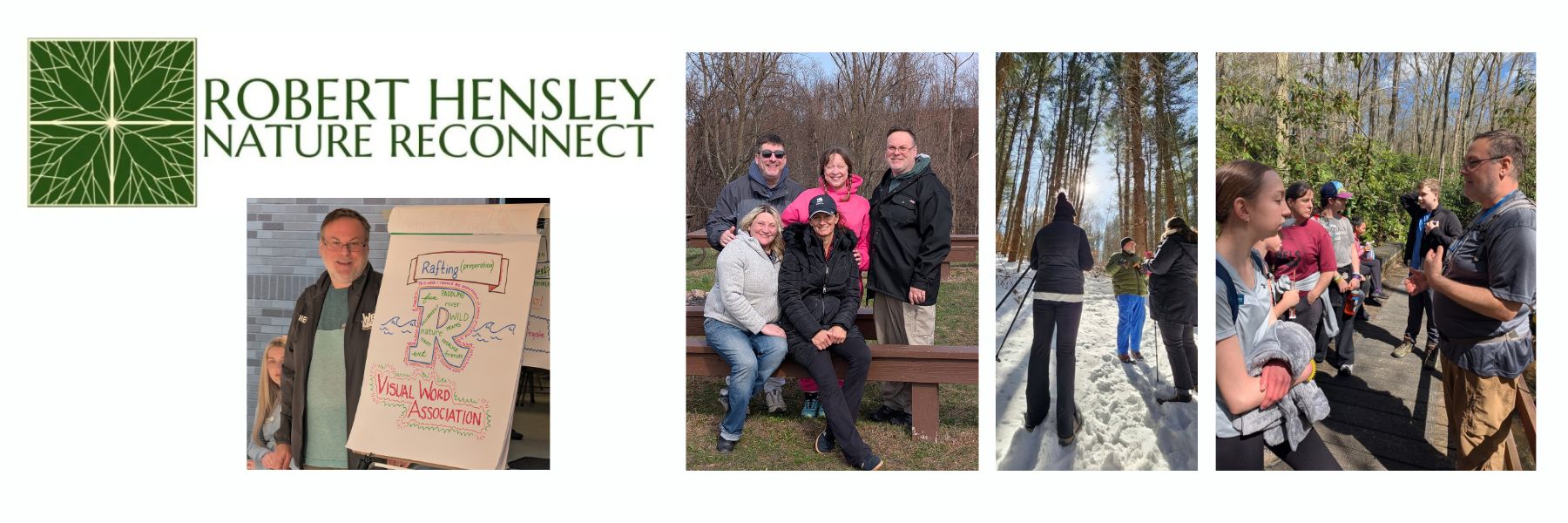
DISCUSSION
Introduction and Guest Overview
- Introduction of Robert Hensley: forest therapy guide, certified meditation leader, sound therapist, founder of Nature Reconnect
- Shout-out to Eric Knopfschneider for the introduction
Robert Hensley’s Background and Personal Journey
- Career as an award-winning creative and Emmy-nominated makeup artist in film and television
- Sudden health issue: inability to move hands, medical mystery, and resulting depression and uncertainty about career future
- Encouragement from a yogi friend to try meditation before considering surgery
- Early experiences with meditation: attending a class, gaining clarity through conversation with the instructor
- Discovery of elemental meditation, honoring nature through meditation, and sound therapy
Expansion into Meditation and Therapy Practices
- Teaching meditation and sound therapy classes in Los Angeles and beyond
- Challenges of connecting with nature in urban environments
- Spiritual rewilding and development of a personal practice integrating meditation, sound, and art therapy
Integrating Nature and Outdoor Experiences
- Personal journey deepening connection with nature through elemental meditation and hiking
- Adapting practices for clients in more natural, accessible settings (e.g., campgrounds, state parks, backyards)
- Importance and impact of outdoor meditation and sound therapy experiences for participants
Therapeutic Modalities Explained
- Diving into meditation for pain management and psychosomatic stress
- Sound therapy: crystal bowls, Tibetan bowls, gongs, percussion, frequency generators
- Discussion of clients’ experiences with sound therapy
Transforming Personal Growth into Professional Offerings
- Transition from personal healing to helping others through teaching and guiding
- Leading group and one-on-one experiences outdoors (e.g., stargazing, forest sessions)
- Addressing vulnerability and emotional openness in guided meditative and nature-based experiences
- Building trust and comfortable environments for clients
Distinguishing Between Modalities
- Forest therapy: using the forest as a tool for reconnection (including forest bathing)
- Rewilding: broader concept focused on reconnecting with one’s wild self and rhythms with nature
- Emphasis on stewardship, conservation, community, and personal alignment with the natural world
Services Offered by Nature Reconnect
- One-on-one and group guided meditation and sound therapy sessions
- Candle gazing (trataka) for beginners
- Workshops on personal rewilding, wild self, and creative placemaking
- Consulting for organizations on incorporating nature into business environments
Website Tour and Professional Transparency
- Overview of website features: biography, mission, service descriptions, newsletter signup, Patreon community
- Training credentials and ongoing professional education
- Upcoming workshops and client testimonials
- Additional projects, such as the Cut Paste Rebel art initiative with the National Road Heritage Corridor
Professional Reflections and Aha Moments
- Sharing a powerful moonlight meditation and stargazing event on family farm as a moment of clarity and purpose
- Insights on overcoming imposter syndrome by consistently practicing one’s craft
Advice and Encouragement for Listeners
- The essential, scientifically-based benefits of connecting with nature
- Nature as integral to daily life, not just something “out there”
- Suggestions for simple ways to connect: houseplants, balcony time, hugging or touching trees
- Description of “fractal gazing” exercise to reset perspective and improve well-being
NEXT STEPS
To learn more about the Robert and his work, visit his website at https://rhnaturereconnect.com/, and on these social sites:
Facebook: https://www.facebook.com/rhnaturereconnect
Instagram: https://www.instagram.com/rhnaturereconnect
RESOOURCES
Outdoor Coaching by Jonathan Passmore and Ellie Lloyd-Jones
Coaching Outdoors by Lesley Roberts
International Mindfulness & Meditation Alliance: https://www.internationalmindfulness.org/
Alma Oasis: https://almaoasis.com/
KEYWORDS
Robert Hensley, Nature Connect, Rewilding, Forest Bathing, Forest Therapy, Sound Bathing, Outdoor Coaching, Howard Fox, Outdoor Adventure Series, Podcast Interview
#RobertHensley #NatureConnect #Rewilding #ForestBathing #ForestTherapy #SoundBathing #OutdoorCoaching #HowardFox #OutdoorAdventureSeries #PodcastInterview
My Favorite Podcast Tools:
- Production by Descript
- Hosting Buzzsprout
- Show Notes by Castmagic
- Website powered by Podpage
- Be a Podcast Guest by PodMatch
- Banner Customization by Nano Banana & Canva
SPEAKER_01
Hello everyone, this is Howard Fox and welcome back to another episode of the Outdoor Adventure Series, the podcast that celebrates individuals and families, businesses, and organizations that seek how to promote the exploration, stewardship, conservation, access, and enjoyment of the outdoors. Robert Hensley is our guest today on the Outdoor Adventure Series. Robert is a forest therapy guy, a certified meditation leader, and sound therapist, and founder of Nature We Connect. And I want to thank Eric Knopfsnyder. He is the public relations director for Go Laurel Highlands for making this introduction. Robert, it's good to see you again. How are you? Good to see you, Howie. Thanks for having me. My pleasure. I'm very excited to introduce you to my listeners because do you ever notice when you start to think and talk about things, all of a sudden everywhere you go, they're like presented to you. It's like what you think about, you bring about. And this whole idea of just being outside in nature, the connection between the outdoors and all in our physical and mental health and well-being, it's so very prevalent today. And I'm really starting to embrace this topic. I would love if you could start off by sharing a little of your background with our listeners about how you got into this idea of forced therapy, rewilding, sound therapy, meditation, because it's all from the chat we've had, it's all very much integral to the work that you're doing today.
SPEAKER_00
It is. It's all connected. I am a or have been in the past, maybe a little less now, an award-winning creative. I worked in Dolman Television for years as a makeup artist, and me nominated. And I found myself one morning that I couldn't move my hands. And so it was a bit of a medical mystery. No one could really tell me what was happening. And I was getting really depressed and worried about what my future in the industry might look like. I hadn't really thought about a backup career at that point or ever. And I ended up, I started talking with a neurosurgeon, and they were testing my nervous system and all of this other stuff. And a friend of mine who's a yogi was teaching a class in India and called me and said, before you let anyone cut into your head, do you need to try meditation? Promise me that you'll buy a meditation clarus, that you will give give it a shot and see if that helps. And I grew up in a really small town in Pennsylvania. Farmers, wood people, they don't go in for meditation and yoga and all that woo-woo stuff. And but I did what she asked me. I think I didn't have anything left to lose. So I found a meditation class. And the first class was interesting. It was something I hadn't tried before. I don't know that I took it completely seriously. And so when I was speaking with my friend about it, she was like, You need to give this more of a shot. Take the take the meditation leader to coffee, find out what he's trying to get you to do exactly. Let him know what you expect or what he what he expects from you to really get into this. And that started the journey. Once I had talked to him and realized what it was that we were supposed to be trying to get out of this class and what I was looking for, suddenly it just seemed like the most logical thing in the world. And then that opened doors to other types of meditation, specifically elemental meditation and this idea of honoring the natural world through meditation, sound therapy, using frequencies to change and keep our energy centers open to manipulate the way that people feel through sound. And so I started teaching classes in Los Angeles, which, if you've ever been to Los Angeles, there's a guru on every corner. Someone is selling some cure everywhere. So it's a really, it's a really kind of dense market. And I also realized that this idea of connecting with nature, while it sounds great, in Los Angeles, a city like Los Angeles, going into the woods or spending time outside is a huge investment of time.
SPEAKER_02
Right.
SPEAKER_00
You have to get in a car and drive an hour to get to a city park. You have to drive two hours to get to the beach to get to Los Angeles or Angeles National Forest. You're two hours out. And so I started seeking other places that were maybe a little more natural, had nature in their backyard to start kind of teaching classes. And so I was teaching classes, crossing the country. And somewhere along the way, I got hit with a huge bout of imposter syndrome. I realized that yes, I understood this connection that we wanted to have, this honoring the natural world, but I never felt that I actually had that connection. While I grew up in a really small town in Warwell, Pennsylvania, I hated trees and green things and animals and bugs. And I just I wanted nothing to do with it. It was the whole reason I moved to Los Angeles in the first place. I wanted steel, glass, and concrete and give me cars and cameras and technology. So it I had to take a step back. I had to start looking then at my life and my relationship with the natural world. And that led me to something called spiritual rewilding. Okay. And from there, I was able to build my own process, my own practice, my own thoughts about how people interact with nature and how we relate to nature and how we can utilize certain tools like meditation, like sound therapy, like art therapy to rekindle that relationship with nature. Okay. So I've got questions.
SPEAKER_01
So you're in LA, you're in the LA kind of lifestyle, just doing things for other people. And I'm sure you heard a lot of stories. You're like, it's probably another form of therapy. It's like the bartender and the stylist and the makeup artist. You're all like therapists without the advanced degree. But I am curious, you went from your some your body just did something, shut down, and you had to figure out what's going on. And then you're luckily you had this friend who's a yogi and said, before they do anything, go do this, go find somebody, talk to them, get to know them. And then you jumped to you started teaching. Okay. It seems to me there's a time gap here, but what did you get started with?
SPEAKER_00
So when I took the meditation class, it was a class called Meditation for Pain, and it was about pain management. Because not only was I having issues with my hand, but it was it was quite painful. It really, they were really stiff and locked in place. And really, after maybe two or three months of these meditation classes, I woke up one morning and my hands were moving. They were still stiff, but I had more in my hands than I had in the past. And then that's when I really started thinking about okay, so what was this? And so talking to my doctors and realizing that it could potentially just have been a psychosomatic expression of stress. Okay. And I had just come just prior to this, I had worked on a TV series that was incredibly stressful. It was a wonderful experience, and I loved working with everyone. It was a stressful experience. And I think that and I think that's what led to the issue. So once I gained use in my hands again, then I was able to go back to doing makeup and I was able to not feel so lost. But at the same time, I'd already stumbled onto this thing that I was incredibly interested in. I wanted to know more because if this one meditation leader could do this for me, how might I be able to use that to help other people?
SPEAKER_01
Okay. Okay. So you during the description that you have shared with us, you've mentioned natural meditation, sound therapy. Now, here in Boulder City, Nevada, where I live, there is a woman who rents a room up on the second floor of some building in the historic district of Boulder City, and she shares photos of people laying down in these big bowls. Is that sound therapy?
SPEAKER_00
Yeah, yeah. So there are massive bowls where you can stand in them, sit in them. There are orchestra bowls, which tend to be more kind of crystal bowls that you play and create resonating tones. There are Tibetan singing bowls that can be used. Some people use gongs, you can include things, other sorts of percussion and wind instruments, or if you're really into how technology kind of plugs into this, you can also work with frequency generators. Okay. Which which create tones and electronic magnetic electromagnetic pulses that again, those frequencies resonate or continue to resonate within a space.
SPEAKER_01
Okay. I think I experienced that the electromagnetic resonance. I was on a at a coaching training, and it was the topic was appreciative coaching, but in any case, we were sitting, we were at this device, and the uh the the instructor was using this device to get us to recognize where we were in terms of this piece of equipment way over my head. I was just like, oh that's interesting. I'm not a woo kind of guy, but so because this is the outdoor adventure series, how did and I need to I'm looking to I sit at a desk all day, almost all day, podcasting, coaching clients, and my goal is to get people out in nature. So putting the outdoor in the outdoor adventure series, how did you begin to take this growing knowledge and experience that you had taking people and introducing them to the outdoors and experiencing for yourself, seeing in them the impact that nature can have on them?
SPEAKER_00
I think it started with me, with myself. As I was learning more about elemental meditation and this idea of honoring the elements in meditation, I started to spend more time in the outdoors. So my friend and I would we'd hike multiple times a week, and we would go out and we would and I would talk about the stuff that I was learning and what I was finding for myself and this connection and how that was growing. And and it just again, it felt that particular part of meditation really resonated somewhere deep inside of me. And then again, you start to realize that it's a lot to ask people in certain environments when they have to invest a certain amount of time just to get outside. It became much those classes became much easier, those moments when you're working with people when you're in a space that is more natural. When you're working at a campground or a state park or even in the backyard in somebody's property out in Joshua Tree. Not a bad place. Not a bad place at all to do your sound therapy in the desert at night with the stars with them, come on, like couldn't ask for more. And those were great experiences. And the way that people reacted and how they felt that those moments, those meditative moments, those frequency moments changed or shifted things for them was really rewarding. And the fact that people were, again, that they were experiencing change. It wasn't just that they were experiencing something new that was enjoyable, but they come back to you a week later and saying, okay, this changed. This was a change. And those were things where you start thinking, like, okay, this is something that I really want to spend more time getting into. And I didn't realize that was going to lead to forest therapy. At that point, I was I was just honoring nature. And it wouldn't, and it would take a little time before I had had that little demon kind of attack me where I was, what do you know about nature if you've never really appreciated it?
SPEAKER_01
Well, you were out there with your at that time, would you have called them clients or were they just friends, acquaintances?
SPEAKER_00
No, they were clients. Okay. I would say that they were clients because not usually they were people that I would meet through a friend. Gotcha. Or a friend would say, Oh, my this this gal I know has a massive house with a beautiful backyard overlooking the Pacific Ocean. She wants to do something for her girlfriends. Will you come and do the singing bowls and we'll do a whole thing? And so yeah, but I would say that those people they were not people that I knew. And and a lot of them, again, would be more not to say that they haven't become friends or didn't become acquaintances, but to start they were clients.
SPEAKER_01
Okay. When you were with them out in nature, and we'll use Joshua Tree as an example. Did you come across what I would consider issues of vulnerability? Because when you're in an office or you're on a Zoom call just talking, at some point during the coaching conversation, my clients will share things. Okay. And and because there's you're building trust. And here you are taking these individuals' clients out into nature, into the backyard in the Pacific. And I get that, by the way. I did an episode with a gentleman who was a cancer survivor, owned a home in Carmel by the Sea, and used his home and nature pass that he built for healing. And that's where I got started with this whole idea, but I digress. Was there any issues of vulnerability on the part of the folks that, okay, we're gonna lay down, we're gonna close our eyes, for forget about the creepy crawlers, especially in the desert. What kind of the vulnerability issues did you face with those clients?
SPEAKER_00
I think that when you are inviting anyone into a guided meditative space, that, and and whether that's inside or outside, that you are going to have people who connect incredibly or much more deeply than other people. There are people who will I've done stargazing here in the Appalachians where I've had 50-year-old men start to weep by looking at the moon, and you and you can you just know that they've been so moved by the experience. Some people will open up and share parts of their life stories with you. They what why they feel a particular way. And as you mentioned, being a makeup artist is very similar to being a bartender with a therapist without the degree. Your job as a forced therapist or or meditation leader is to be able to accept the information that they're giving you, not necessarily wanting to offer advice on how they need to change something or why they need to change something, but allowing them or inviting them to be mindful, to be in the moment, to allow those feelings to occur, to be there, they're valid for them, and to help them recognize that it's okay to have them, that there's nothing to be ashamed of. As far as people being vulnerable, as far as being afraid of being outside, which I've had, you can only do as much as you can to make them feel as comfortable as you can in a space. There are things that you try to bring into those sessions that will mitigate any discomfort, whether that's laying down a rug in the desert so that people are not laying in dirt, whether that's inviting them to bring pillows and blankets that make them feel more comfortable, providing, making sure that you're providing them with water, giving them, and a lot of that is the work leading up to the session itself, making sure that they understand what to bring, what to wear, what to expect. So that because again, for a lot of people, if it's something new that they've never experienced before, like they're they're putting their trust in you, and people begin to trust you if you start to manage their expectations early on.
SPEAKER_01
Gotcha. During our conversation so far, you you've mentioned a couple of these modalities, force therapy, sound therapy. Also, you used rewilding at one point. What's the difference between say rewilding and say forest therapy? Or is there or is there a difference at all? Is it the same thing, just different words?
SPEAKER_00
No, so forest therapy is utilizing the forest as a tool for reconnection. It is a lot of people hear about forest therapy and odd immediately think of forest bathing, which is one of the one of the most common modalities of forest therapy. Rewilding is a maybe broader concept of reconnecting with the natural world. And that is really based in the idea that we need to reconnect or should reconnect with our wild self, our wild being, allowing ourselves to feel natural again, that we need to align our bodies with the rhythms of the natural world, that we need to honor our ancestors and where we came from because their experiences are what have created our own response to the natural world, where we come from, and ultimately how all of that kind of comes together in a way that inspires action, that inspires us to become stewards and think about conservation and preservation and building a sense of belonging and community.
SPEAKER_02
Okay.
SPEAKER_01
In just a few minutes, I'd I'd love to go to your website for you to take us on a tour, but I wonder if we could first talk about the types of services that you're providing, either to individuals or groups, in service of their need to have that reconnection to the outdoors, to feel in the moment, in the presence of whether it's watching the stars, which I could totally get into, hugging the tree, walking down a path, putting your feet in the water, and or just noticing the branch going down the stream and just being there in the moment and what's going on. Could you describe a little bit about the range of services that your practice is providing?
SPEAKER_00
Yeah. So Robert Hensley Nature Reconnects, I found a bat after I had gone through kind of spiritual rewilding and I started working on this idea of personal rewilding. And the services that I offer are one-on-one guided meditation sessions, one-on-one sound therapy. I'm happy to do that for a group. There's sometimes for a group of people who are new to meditation or who haven't tried meditation before, I will ease them in by doing a Tratica class, which is candle gazing, which is single-pointed focus meditation. We will, I've taught, I've done workshops on different aspects of personal rewilding, mostly around the concept of the wild self, reconnecting that part of ourselves. I'm very interested now in and do a lot of classwork with this idea of creative placemaking, utilizing art and creative tools to help people find that sense of belonging or create that sense of connection with the natural world. I've worked with local chambers of commerce and other local corporations to talk about how including nature sounds and nature, natural textures and things in their business, in their businesses and places of business help to increase productivity. Yeah, I don't know that I've stopped, I don't know that I've stopped figuring out what I can offer. I think that I think an open Sure.
SPEAKER_01
I I truly appreciate it as a coach, as I look to provide for myself and my clients individually or as group outdoor coaching. And how can I use nature? And I look at it as an agent, nature is an agent of change for the individual. I also love the fact where you're located in Pennsylvania, Laurel Highlands area, you've got a lot of possibility. You've got trails, you've got water, you have dark. Sky. And I think the sky is the literally the limit for what you can provide to clients that are looking for that opportunity.
SPEAKER_00
Yeah, I think one of the things that I really enjoy doing, which was something that I've just implemented this season, has been an introduction to forest bathing, which again, people here not really sure of what that is, they think that they have to bring a bar of soap. But it's but the people who have joined me on the trails and have allowed themselves to experience this thing that maybe they didn't experience before, which is really just walking in the forest slowly and mindfully and taking the time to connect each of their five senses to this experience. It is incredibly grounding. It's it's it creates a sense of connection that most people don't know that they're missing. It was funny, I had a group of people who had joined me and they were hikers. They've hiked all over the place. Like they've really gone around the world in their hiking booth. And yet the one thing that they came away with was the fact that in none of the places that they visited had they become so connected with the space. They were so worried about trudging quickly and getting from point A to point B and getting back again and all of this stuff that they missed so much about those places. And so as we were leaving the trailhead, they were talking about we need to go back to that place over there, and we need to go here, and we I want to see more of that. I want to do this there, which was incredible. It's such a gift to know that you can help people find these ways to really enhance or experience the world in a whole new way.
SPEAKER_01
I love it. Many years ago, when I first joined the Outdoor Writers Association of America, I went to their annual conference, it was my first conference. It was in J Peak, Vermont. The colors had were just changing. And I went out on a birding adventure. And and the concept of slow birding was introduced to me as the hikers who are going from country to country with their hiking poles and boots, it's a very trend can be a very transactional activity. Start here, got to get here by a certain time. Okay. And there's no time, or very little time to slow down, be present in the moment, and just observe. And same thing with the slow birding in Vermont is go find a bench and just sit there in the morning and just listen, smell, hear with again, using your senses to take in what is around you because there's a lot going on if we just slow down in the moment. Listen, I'm going to go ahead and share our screen and hopefully with the modern technology. So we should be seeing your screen right now, your website. We can that's my website. Excellent. So take us on a little tour, give us the highlights, and we're going to provide backlinks to the website and to your social sites on our show notes. But take us on a little tour here.
SPEAKER_00
All right. So on the homepage is just uh if you scroll down, there's a place to subscribe to the newsletter. There's a little bit of information about me, what my mission is, what my goal is in creating or founding this company. It gives a little more detailed information about what I've studied and what I offer. I think at the towards the bottom of the page, I think there's oh yeah, there's information about my Patreon. So I have an online community that you can subscribe to. I don't find my affiliations or my training. I want to make sure that everyone knows what I've studied, where and what's happening. There's some new stuff coming up here.
SPEAKER_01
Love it. And by the way, thank you for introducing me to Alma Oasis because I did sign up for two other courses, one on the forest therapy certification, sylvo therapy practitioner. And also there was like an ocean ocean course as well. So I'm looking forward to that. So thank you for those introductions.
SPEAKER_00
You're very welcome. I looked at the ocean therapy as well, but I don't look close enough to any ocean to make that work for me.
SPEAKER_01
I have Lake Mead, it's the water's still there, it's going down, but it's still there.
SPEAKER_00
But unless yeah, and then so of course just a contact form very podcast the home page. Okay.
SPEAKER_01
Now, something I just saw that I'm curious about. I don't know if we're gonna have time to go into it. Where was it? Let's see, you've studied Celtic shamanism, spirit animals, and chakra alignment. I was actually curious what my spirit animal was, but maybe that's a whole other conversation. Okay. All right, so a lot of cool information, good information about yourself. I love the commitment to continuing professional education and training. I love that. Some folks hey, they get my certification, okay, I'm done, but it doesn't work that way. You you have you have to invest.
SPEAKER_00
Yeah, I think for me, especially coming from such a rural area where not a lot of people graduate think, let alone go to college, the idea of continuing education and continuing to learn and understanding how important knowledge and wisdom is, that's always been, I don't know, just a huge part of my process.
SPEAKER_01
Okay. Okay.
SPEAKER_00
And I see you've got subscribe. Okay. That will take you to give you more information about my my Patreon community. Okay. Patreon, of course, is a subscription-based program. So there's a there are free subscriptions, but I post free articles and free tidbits and things for everyone. And then there's a $15 per month a going wild subscription, which offers kind of monthly meetups and newsletters and articles and all kinds of stuff.
SPEAKER_01
Excellent. Two lattes a month. Okay, big deal. All right. I love it.
SPEAKER_00
And then we've got the range of services. So there's, of course, information about personal rewilding, just giving people a little more information about what personal rewilding is. There's information there about forced bathing because we want, I really felt that it was important that people understood that forced bathing was a standalone tool and was not the end-all and be-all of personal rewilding or forest therapy. Good. Then the workshops that I lead, the so this one is the one that's coming up in October, which is Creative Placemaking in Gratitude. And that is a workshop that is really a celebration of autumn. And again, playing on this idea of realigning ourselves with the natural rhythms with the changing of the seasons, shifting gears from light and growing things to now being able to start the rest and relaxation period by honoring the harvest and how we can settle into nature and start building this idea of belonging and community based on natural spaces. I love it. I love it. And of course, there's a little bit about whenever I get my surveys back, the quotes that I like, I put you know it's and then I think that's important is to get those testimonials. I think that they're I think that they're really important too. And I really do love hearing back feedback, whether it's good or bad, is it makes everything a learning experience, right? You never know whether or not what people are gonna say or what they're really getting until you until you find out from them, until you ask.
SPEAKER_01
This is something I was interested in. Cut paste rebel.
SPEAKER_00
Yeah, so cut-paced rebel is there is a nonprofit organization here in southwestern Pennsylvania called the National Road Heritage Corridor. The National Road is Route 40 that travels through this part of the country that was like the first national highway. And so this organization really supports projects, artists, all kinds of stuff along that corridor. And so I was hired to create the curriculum to create a series of workshops and work with local artists to develop printed zines and create photo essays that really told the story of some of the smaller communities and around the area here in this part of Pennsylvania. And so we were able to preview our work at Frank Lloyd Wright's Falling Water, which was really exciting for most of the artists because they'd never been, some of them had never been exhibited before, and most of them had never been exhibited at an internationally renowned museum before.
SPEAKER_01
Excellent, excellent. Very nice. By the way, I'm doing some periodic podcasting on the mother road, which is Route 66, and 40 is the considered the father road. And I know it extends all the way going out west too, and I think that's pretty cool. Very nice. Anything else? Here we I know there's the get in touch so we can reach out to you. I think that's probably how I reached out.
SPEAKER_00
Okay, excellent. Of course, I my Facebook and Instagram links.
SPEAKER_01
Oh yeah, that's yeah, I love how it's kind of keeps spinning there. I love it. All right, let's get you get us back together, stop sharing. And excellent. Thank us, thank you for taking us on the tour. You know, I'm curious, I'm curious as you look back, grew up in in Pennsylvania, you found your way out to La La Land, had this epiphany, physical epiphany, which I can appreciate by the way. That was how I ended up in coaching. I'm a recovering IT business consultant, and I was in a very beautiful place in the world, Victoria, British Columbia, working on the prop project, and I was miserable, literally miserable. And I had a physical reaction to being out there working with the people I was working with, which was incredibly toxic. And I just realized I can't do this anymore. I needed another profession. And that's how I landed in coaching. And then when I ended up from Chicago to Las Vegas, is how I got into the outdoor podcasting because I'd already had a business podcast. But but we have to recognize when things are not right or they're off, and try to understand where it's coming from, and also realize those those opportunities also open doors for us. And so I totally appreciate the how you figured out that something needed to happen and different. You've totally embraced that. So I really want to acknowledge your accomplishments and what you've achieved. And I'm curious as you look back now on your trajectory, your personal professional trajectory. What's been your aha moment? Wow, I get to do this.
SPEAKER_00
Probably two years ago, I did a moonlight meditation and stargazing event on my family farm. There's a we're at the top of the mountain, and so it wanted being like a hayfield, but it's the summit, it's the tallest peak around here, and so when you stand at the top, you can look around and get a 360-degree view of everything in this part of the islands. And we had been we had done the meditation, we had a couple of criers that evening, which was fine, wonderful, beautiful. I'd love that they connected in that way. I got everyone calmed down, and we had hot cocoa and cookies, and we were just gazing at the stars. And as we were wrapping up, I don't know, there was just a moment where I was just standing on top of this hill, looking around and realizing that I was just amazingly blessed to be in that particular place at that particular time. I felt incredibly grounded, I felt useful, I felt like I was I felt like I was fulfilling a purpose. And any questions I had up to that point about whether or not I should move forward with Robert Heatherly Nature Reconnect, just they just went away. It melted away. I realized that this was something that I really felt was necessary and needed. I don't know if everyone else needs it, but I know that I need it.
SPEAKER_01
And we you had said it earlier about imposter syndrome. Is this is it sounds like that was an epiphany that you realized I am doing good, I'm making a difference for myself, because it has to start with us, but also other people are being affected by this work. And and each in their own different way.
SPEAKER_00
I think, yeah, I would love to say that was the only time that I'd ever experienced imposter syndrome, but I think if I don't know if any of your listeners, and maybe some of them have experience in Hollywood, it is a nightmare. You had to be made the some pretty strong stuff because it's rejection over and over again. There are a billion people trying to do the same job, and they can only hire so many of us. So there's a lot of time spent not working in the field that you thought that you wanted to work in. And so we have to develop other skills. And there were times, even when things were going well, where you suddenly think, oh God, somebody else, this is so totally something that somebody else should be doing or could be doing. And I'm not really the best person. I was probably just the cheapest. Or, you know, even the project that I was nominated for an Emmy for, I had such an amazing time on that project. And it was a project that I had spent kind of years working on. And there was just something about that season where just I at one point I thought, this is gonna, this is gonna be the end of me. This nothing looked right. I can't do anything right. I I somebody else could have done so much better. But I was and if it hadn't been for if it hadn't been for the nominations coming out, and then and then and I was really confused. I was very confused because I was just okay, but they but yeah, I don't know that I would have I guess what I'm trying to say is that the thing that I've learned along the way is that the only way to get over in imposter syndrome is to just do. If you're a writer and you feel like suddenly you don't know if you should be a writer, just keep writing. Because if you're writing, you're a writer. If you're doing makeup and you feel like, oh my god, maybe I'm not the best makeup artist, that's okay. Just keep doing makeup because if you're doing makeup, you're a makeup artist, right? If you're a coach and you think maybe I shouldn't be coaching, as long as you're coaching, you're a coach. And then and we have to remind ourselves too. What do you call the doctor who graduated last in medical school? Doctor. We don't know, we don't know whether or not they were the valedictorian of their class. For all I know, he was you know hit in a bung before he walked across the stage to accept his diploma. For all I know, you know what I mean? Yeah, we don't know. But the thing about it is the confidence that people have in doing what they do and being who they are, that's what saves them from that imposter syndrome. And that's really the only way to get over it is just doing.
SPEAKER_01
Keep doing it, remind yourself that you've done it before and your personal power and the success orientation, and just keep as story and finding Nemo said, just keep swimming. Keep just keep swelling. So, one last question for our listeners what would you like to share with them about why they should lean into embracing the rewilding forest therapy, forest bathing, this idea of just getting outside and being with nature in the moment, reflecting on where they're at, and just slow down and just be there. What would be your advice to them?
SPEAKER_00
I would say that we live in a really fast-paced world, right? We're used to instant connections and digit digital contact, and and we all talk about nature or the natural world as something that is out there, something that we visit or that we can go to. And what we miss, what we forget, is that nature is where we live. Just because we built apartment buildings over top of it or sidewalks and we don't have lawns doesn't mean that nature is not in those places. I think that people also miss the fact that we are innately or connected to the natural world. We need so much time in the sun and we need trees to breathe oxygen, and we, you know, just spending time outside changes our physiology. It changes our cortisol production, it changes our heart rate, it changes blood pressure. It's we get so many mental and physical health benefits from just spending two hours a week outside that the fact that American doctors and the American medical establishment refuses to see or accept this research from other countries about how nature is important to our survival is ridiculous. And because we can't, there's no way around it. These countries that are saying that they're the happiest countries in the world and they have people who are, they have a hundred thousand people in their country who've made it to over 100 years old. The one thing that they all have is that they support this connection to the natural world. They support forest bathing, they support rewilding, they are setting aside government funding to make sure that people have access to the natural world, to public green spaces. And then suddenly you get the United States and we're spending government money to get rid of our public parks and our national resources, and it just how can we be so far on the ass end of this stick? And that's what I want people to remember. I want people to know that okay, fine, you don't have to go to Yosemite if you don't want to. But even if you're living in a in an apartment, get a house plant, step out right onto your balcony, open a window, breathe in whatever air you have available to you. Take the time to slow down and connect your senses to the world you live in. Be grounded, understand that the tree on the sidewalk is giving you oxygen every so often. Whether you care, whether or not people are less looking, give it a hug, touch it, say good morning. And again, it's one of those things where it is scientifically proven that if you touch that tree, you are going to have a better day than you've ever had before.
SPEAKER_01
Scientifically proven that I love that. I think I want to incorporate that into my daily routine. I like that.
SPEAKER_00
There this there's this practice called fractal gazing. I like to call it awesome gazing. But you step up to a tree, any tree that calls out to you, right? You step up, you put your hands on the side of the tree, and you step forward, get close to the tree, about half arm's length away, and you look up through the branches, not to focus on the branches themselves, but looking through the branches to the sky beyond. And you do that for 30 seconds. And some people who are incredibly sensitive to the experience kind of have a popping sensation right here in the center of their forehead. Some people say that they hear a pop rather than feel it. And then once that happens, you just close your eyes and you bring yourself back to center. You thank the tree and you step away. And what you've actually done in that moment is you've reset your prefrontal cortex, the part of your brain that controls kindness and generosity, how you perceive the world from that point, right? And so something else pulls you away from it. But those moments after doing that, the world looked incredibly green, it looked incredibly bright, the sky is bluer, people smile more. And it's not that they do, it's just that you notice it more because you changed the way you're thinking, you've changed your actual perspective on the world. People could do if people could do that and understand how that changes their outlook. on everything the world would be a much happier place. Beautiful. No.
SPEAKER_01
And I can see how we can incorporate that into our lives. It's so easy to do. Just very easy. Yeah. There's no investment of money needed really. Robert, thank you so much for joining us on the outdoor adventure series and just in introducing us to your new passion or this of yours. And I don't know if you still do the the makeup work, but what you're doing today, there's so much opportunity to make a difference in people's lives and introduce them to these wonderful concepts. So I really appreciate you taking the time and helping not only educate me but also our listeners on this connection between nature and slowing down and our health and wellness and and the impact that nature the outdoors can have on us all. So thank you for spending time with us today. Thank you so much for having me, Howard. It was a pleasure. Excellent. Listen, stay in a line we're going to do a quick close and then you and I can have a final chat okay? Sure. All right folks we've just been chatting with Robert Hensley. He's a forest therapy guide, a certified meditation leader and sound therapist. He is the founder of Robert Hensley Nature Reconnect. What a wonderful episode. Lots of insights and tidbits of knowledge and information and really also as a coach just the journey from on the pivot he made in his career in his life and you know recognizing that there was a change that was needed and really reinventing himself in a really wonderful career that using nature as that agent of change and just helping to make a difference in people and individuals, groups, teams, organizations, communities all the all of their lives. Now we are going to provide backlinks to Robert's website rh natureconnect.com. We'll also have backlinks to his Facebook and Instagram pages as well. And we have also a resources area where we will provide some of the backlinks to the organizations on Robert's website. I'll also have a backlink to the books outdoor coaching and coaching outdoors as well. Now as for us you can find this episode on our website outdooradventures on Facebook and LinkedIn on our outdoor adventure series pages. The YouTube of this video the YouTube of this episode will be up on our YouTube page and that will include the touring of the website that Robert had uh taken us on and also of course you can listen to this episode wherever you get your podcast from okay folks wherever you are whatever you're doing go out there and have a fantastic day and we look forward to having you join us on a future episode of the Outdoor Adventure Series podcast. Take care now