


120 Years of Wigwam Socks: Sock Science & Outdoor Adventure
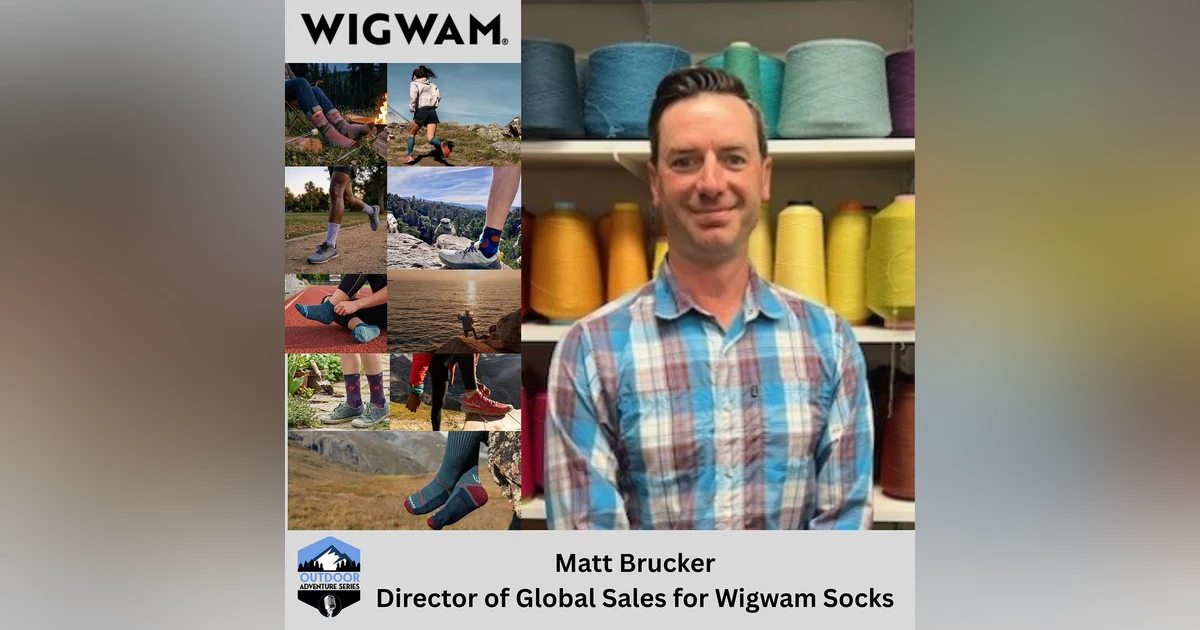


120 Years of Wigwam Socks: Sock Science & Outdoor Adventure - Welcome to the Outdoor Adventure Series! In today’s episode, we're chatting with Matt Brucker, Director of Global Sales for Wigwam Socks, a heritage sock company based in Sheboygan, Wisconsin, with over 120 years of history.
Sponsored by Travel Wisconsin and Destination Madison, this episode explores Wigwam’s evolution from hand-knit hosiery to an innovative leader in performance socks for athletic, outdoor, work, and specialized needs.
Matt shares how Wigwam has adapted to new technologies and materials, all while maintaining a strong commitment to U.S. manufacturing, sustainability, and community impact.
We’ll take a virtual “tour” of the Wigwam website, learn about the various sock technologies and materials—like premium wools and the soon-to-debut alpaca line—and hear how Wigwam crafts socks for every adventure, from hiking to everyday life. Whether you’re a longtime fan of the iconic striped tube sock or an outdoor enthusiast searching for the best in foot comfort, join us for an in-depth look at the art and science of American-made socks.
DISCUSSION
1. Introduction
- Sponsors: Travel Wisconsin and Destination Madison
- Introduction of guest Matt Brucker, Director of Global Sales for Wigwam Socks
- Brief background of Wigwam Socks as a Sheboygan, Wisconsin-based company
2. Wigwam Brand History and Evolution
- Company origins as Wigwam Mills in 1905, starting as a hand-knit hosiery company
- Evolution from hand-knit to automated sock production across generations
- Iconic status of classic white athletic socks with red stripes
- Expansion beyond athletic socks into work, outdoor, and specialty socks (e.g., for diabetics)
- Commitment to Made in USA manufacturing and family ownership
3. Product Evolution and Material Science
- Transition from cotton to polyester and wool in socks
- The introduction of advanced and alternative materials like alpaca
- Discussion of consumer preferences and nostalgia associated with wool
4. Innovation, Technology, and Adaptation
- Emphasis on continuous improvement in sock manufacturing
- Comparison to a Michelin-star chef using similar ingredients but unique recipes
- Philosophy of “no fiber left behind”: openness to both synthetic and natural fibers
- Proprietary blends and technologies (e.g., Ultimax)
- Collaboration with suppliers to develop or access cutting-edge yarns
- Recycling, upcycling, and sustainable sourcing of materials
- Challenges in developing new yarn types (e.g., alpaca) and long product development cycles
5. Sustainability and Environmental Impact
- Core focus on environmental and business sustainability in company strategy
- Localized supply chain: US manufacturing, local labor, and local sourcing
- Efforts to reduce carbon footprint through domestic raw materials and suppliers
- Commitment to profitability as a form of sustainability
6. Role in the Sheboygan Community and Workforce
- Employment of 65–80 people, with adjustments for seasonality
- Multiple generations working at Wigwam, sense of local pride and brand protection
- Challenges and efforts in sourcing specialized talent (e.g., international hiring for knitting expertise)
- Partnerships with local government and diversity initiatives
7. Product Assortment and Website Navigation
- Guided tour of Wigwam’s website structure: categories for men, women, and kids
- Shopping by activity or end use: daily wear, running, hiking, work, hunting/fishing, tactical/uniform
- Customer loyalty and consistency in product naming/numbering
- Highlight on hiking socks, including bestsellers and materials for various climates and activities
- Evolution from traditional “sock systems” (liners plus socks) to integrated designs
8. Sock Technology and Use Cases
- Impact of fit, material, and shoe selection on blister prevention for hiking and long-distance walking
- Importance of moisture management in sock design
- Best practices for choosing socks based on activity and personal needs
- Specialized product categories for men and women, including sizing and warmth considerations
9. Wigwam Proprietary Technologies
- Overview of Synchroknit®: Enhanced compression and reduced friction knitting technique
- Overview of Ultimax®: Proprietary blend for advanced moisture management
- Overview of INgenious®: Built-in liner and moisture transfer system, uniting two materials in one sock
- R&D process and responses to market needs with new technologies
10. Heritage Products and Customer Experience
- Tube socks and the nostalgia factor
- Wigwam’s local outlet store in Sheboygan: community connection and customer education
- Brand’s commitment to quality and serving both new and longstanding customers
- Continual evolution per customer feedback
11. Distribution and Marketing Strategy
- In-store availability via locator feature on website
- Success with targeted online marketing and social media (Instagram, Facebook)
- Emphasis on respectful and customer-choice driven communication
12. Sneak Peek: Alpaca Sock Collection
- Announcement of upcoming alpaca line based on customer interest
- Description of expected qualities (softness, warmth, durability)
- Commitment to innovation and expanding material offerings
13. Matt Brucker's Personal and Career Background
- Tenure with Wigwam and the sock industry
- Personal affinity for the people in the industry and the outdoors
- History of involvement with both retail and manufacturing sides of the business
- Connection to the Wigwam owning family
14. Resources for Further Engagement
- Ways to connect with Wigwam: website, social media (Facebook, Instagram, YouTube), and email list
- Email marketing strategy: informative, not just promotional
- Collaborations and educational content on foot care and products
LEARN MORE
Website: To learn more about Wigwam, visit their website at https://www.wigwam.com/ or their social sites:
Facebook: https://www.facebook.com/WigwamSocks
Instagram: https://instagram.com/wigwamsocks
YouTube: https://www.youtube.com/@wigwamsocks4766
X: https://twitter.com/WigwamSocksUSA
NEXT STEPS
Visit us at https://outdooradventureseries.com to like, comment, and share our episodes.
KEYWORDS
Matt Brucker, Wigwam Socks, Travel Wisconsin, Destination Madison, Outdoor Adventure Series, Podcast Interview, OWAA
#MattBrucker #WigwamSocks #TravelWisconsin #DestinationMadison #OutdoorAdventureSeries #PodcastInterview #OWAA #OWAA2026
My Favorite Podcast Tools:
- Production by Descript
- Hosting Buzzsprout
- Show Notes by Castmagic
- Website powered by Podpage
- Be a Podcast Guest by PodMatch
- Banner Customization by Nano Banana & Canva
Hello everyone, this is Howard Fox and welcome back for another episode of the Outdoor Adventure Series. Today's episode is sponsored by Travel Wisconsin, who, along with Destination Madison, are hosts of the 2026 Outdoor Writers Association of America's annual conference, which will be in Madison this year. Matt Brucker is our guest today. Matt is the director of global sales for Wigwam Socks, a heritage brand of fine quality socks that has been based in Sheboygan, Wisconsin for over 120 years. Matt, welcome to the Outdoor Adventure Series. Thanks for having me, Howard. Glad to be here and looking forward to talking about socks, like always. Fantastic. And I have to say, as I was researching for the episode and I was looking at your products, it brought back some very pleasant memories because I think, and I hopefully we'll see this when we visit the website. All we had were iconic white socks with a red, I remember a red stripe like around the calf. And I was thinking, that's these guys. And so you you from you brought back a memory, a long ago memory, but thank you for that. So I would love to I'd love to hear a little bit more about some background uh of uh wigwam. I used to be known as or maybe officially known as wigwam uh mills, but this evolution of the company, 120 years, that that's that's a long time to be in business. And so tell us a little bit about the history of Wigwam and uh also we'll get into your role with the company as well.
SPEAKER_00Sure thing. When a company's been around for as long as Wigwam starting the first facility in 1905, there's no logical reason to change your name. You just kind of roll with the times. When the company first started making socks in Wisconsin, it was actually an hand-knit hosiery company. And socks were completely knit by hand. And then you fast forward through the generations and industrial revolution, more automation, machinery coming from Italy and other parts of the world. And so Wiglom continued to evolve to maintain relevancy in the industry and with consumers. And that experience you shared about the white athletic sock, whether it was completely white or had one stripe or two stripes, that's the bread and butter of what Wiglom's done for 10, 20, 30, 40 plus years. But we have blossomed into so much more than just athletic. We have athletic, we have work socks, we have outdoor socks with socks for people with diabetes and swelling in the legs. And so we continue to evolve. And in doing that, we want to simplify. And so there's not a lot of mills left in the country, whether you're making socks or fabric or paper for that matter. So transitioning into Wigwon Socks Company just allows us to attract eyeballs and attention from a younger audience who isn't as not open-minded, but isn't aware that products are still made here in the USA. And that's obviously incredibly important to us. We're going on the fourth generation family owning the company in Sheboygan, Wisconsin. And we have multiple generations of families that have been able to work and uh purchase products from us. And we just want to continue to be that iconic brand where people can go back and continue to find the sock that they've been wearing or their father or grandmother's been wearing, but also they can find something new as we continue to evolve and use new materials and new methods of manufacturing. We can present something to them that they may have never seen in the industry before.
SPEAKER_01Excellent. I'm curious. So back when I was a kid, and I don't want to state my foot, let's just say it's been a little while. We can take a good guess. Yeah. Thank you for that. You know, I I I was thinking, I mean, I grew up with, I mean, everything was cotton socks when I was growing up. Then this thing called polyester came into being. And I know wool has always been around. It's been it's and then the newer other scientifically grown materials, but then there's also some new material materials been around like the alpaca, which we're talking about a little bit. And by the way, when I saw wool and you mentioned alpaca before we start click record, you had me because I just love wool. There's just something about it, and some not a lot, a lot of people are right there with you, Howard. Yeah. And so as they as the stock changed and and the consumers changed, how do you I mean, how are you staying ahead of the curve? Because I mean, you're certainly adapting. 120 years, you you have learned to adapt and thrive, even in the in the tough economy. You're also committed to the U.S. manufacturing, which is great. A lot of people appreciate that. It means great jobs still here in the U.S. But what have been some of the challenges of adapting as technology changes?
SPEAKER_00Man, technology in particular, it's just continuous improvement. And the the interesting thing about what we do, the core of our business is knitting socks. That's that's what we do. Everything else beyond that is simply a choice of which direction we want the company to go. But at the core, we knit socks, which means we have access to essentially the same equipment and the same materials as all of our competitors. But we get to choose the recipe and how to execute the recipe. So not much different than a Michelin star chef in a restaurant. They have the same ingredients that we can buy at the grocery store, but they have a Michelin star, so their food's pretty darn good. Right. They don't make a Michelin star for sock factories, but if they did, I think Wiguam would have at least a couple because we have an internal thing, no fiber left behind. And that simply means we don't discriminate at all against fibers, whether they're natural or synthetic. And that's the two buckets you can move everything into cotton, wool, of any variety are natural fibers. And then you have the synthetics. And we don't refer to them as premium synthetics because we look for a blend, or if we can't find a blend, we make it internally and so it becomes proprietary. Like our Ultimax technology, for example. It's a combination of fibers that produce the end result when knitted into a textile, whether it's socked or any other apparel. And so what we're looking to do is provide customers where they can make the choice. Do they want the premium cotton? Do they want the form of synthetics? Is it a blend? And then by staying in touch with our industry, with our suppliers and the supply chain of yarns in general, we can expose ourselves to new things. There's always little little companies that are have these little incubator projects and they're working on a new synthetic or they're working on spinning the yarn in a different way to make it more durable or softer. And there's companies involved in recycling and upcycling where they're taking natural fibers. And if there's no metal hardware on your apparel, it can literally be chopped up and made into new yarn to be knit again. So it's the ocean of opportunities when it comes to materials. You just have to find a lane and a partner to work with. And so we've got manufacturers of raw materials that we've been working with for decades. And as they continue to evolve, we can evolve with them. And then with alpaca, as you mentioned, there's not really a large established supply chain for alpaca wool. Like it pales in comparison to merino wool because merino wool is used in apparel from head to toe and has been for years. So you almost have to be a catalyst in the industry and create a pull effect for the demand rather than a push. So that that kind of translates into wigwam being the one going to the suppliers and saying, hey, we'd really like more opportunities to use alpaca. Because in sock knitting and hosiery on our machinery, it's a specific window of yarn that we can use, which is quite different than what they use for apparel. And so you have to keep that in mind. And oftentimes it can take months. You could you could be looking at 18 months or more of development time to have something available. So that kind of gives you an idea of how far in the future we're looking as a company so that we can continually evolve.
SPEAKER_01Okay. Two questions uh come to mind as you were just um sharing this message. One is the the green aspect of the business. I mean, you are manufacturing, you you develop materials or you source the development of materials through your your research. The materials arrive at at the manufacturing plant in Sheboygan. It all the machinery that's there, it's using you know energy to run the machinery. You've got the production of the each individual unit. How has the necessity of caring about our environment uh impacted again how Wigwam continues to thrive and be a part of the community?
SPEAKER_00It's it's really at the core of almost every decision. If we boil down our our pivotal milestone decisions, we can always relate it to sustainability. And sure our leadership team and how we look at it, sustainable is is really in two parts, the environment and the business itself. We've been around for 121 years, technically in 2026, and we have every intention of being around another 120 years for the fifth, the sixth, the seventh, the eighth generation of family to help guide us into um into the next uh chunk of time. But to your question about the environment specifically, when you peel back the layers of of Wigwamp supply chain, we knit socks in the US with U.S. labor that's local for the most part. We can talk more about that when it comes to finding specialized modalities in the in the factory. We buy our packaging locally, we utilize local resources for any type of outsourcing, whether it's additional treatments to yarn, or sometimes you take two yarns and you twist them together. And then we also consolidate. So 90% of the work that goes into making our socks happens under one roof in Sheboygan. And then you peel back another layer and you look at the supply chain. Where are the raw materials coming from? So a lot of the yarns that we use can be bought domestically, not just bought domestically, but they're manufactured domestically. So that's kind of where we can reduce the carbon footprint from an environmental perspective. Like we're trying to keep everything as close to home as possible. And then back to what we talked about earlier, the philosophy of the company, making sure that we're competitive in the entire industry of what you can do with materials and how can you make socks so that the retailers and consumers that are buying our products don't have to look at brands from across the world. We have the materials and the technology to knit any sock that they need in their sock drawer. And so that creates sustainability on both sides. We have a future as a profitable company, which is very green, and then also we're looking at leaving the smallest footprint with our supply chain.
SPEAKER_01Given the evolution of the company, and here we are 2026. How has the the the headcount of of the company kind of evolved? Because you've you you are a fixture in the community in Sheboygan. You've got the history, you produce a great product. And I would imagine people feel very personal, protective of the brand, because hey, it's Sheboygan. Whether it's on the shop floor, in operations and design and marketing and sales, HR, things like that. How has the workforce evolved?
SPEAKER_00Well, it's probably evolving today, and I'll have to check in with the team to see what those what those changes are.
SPEAKER_01But what I would say that's why you had a reschedule meeting.
SPEAKER_00Yeah, yeah, among other things. Okay. Yeah. In in Sheboygan County, we employ 65 to 80 people on an annualized basis. There's ebbs and flows to the business based on the seasonality, and when we we ramp up production or we ramp up outbound shipping, particularly in the holiday season. We have a lot more going out the door than we have uh coming in to produce. But I can't remember if I mentioned it earlier, but even today at the company currently working, we have multiple generations of employees. And so there is definitely a sense of pride carried behind people who work there and also buy our products off the shelf. So within Sheboygan County, we work with our local community government and the state to ensure that we are continuing to help drive unemployment down because our employment is consistent. And so you'll have people that have tenure at our company for 25 years or more. And so it's it's a very reliable business for not just the family that owns it, but also the employees that work there. And so that just creates an environment of people showing up to work because they want to be there. And so they bring their best self, which allows us to produce the best products and create the best experience. And then beyond that, the evolution of the US manufacturing industry across the board has meant that for specialized positions, you may have to look outside your local community. And so over the last 40 years and certainly for the next 40 years, we're going to have to continue to work with our local um organizations to look at where we can find expertise in the world. And so, even currently today, we're working with an organization to help create a pathway for visas for families to move here from Europe or Central America, where they've had a long career in circular knitting using sock machines because you can't find it here. We don't have training programs on a national scale. We don't have factories employing thousands of people in the U.S. So that expertise is incredibly unique. And so we may have to look outside our own county or our own state to find that. But also, what that does is allow us to work with great programs and other opportunities to help foster the growth and diversity of Sheboygan and the rest of the state of Wisconsin.
SPEAKER_01Okay. I a question I want to go to is uh the variety of the socks that you're producing and their use. And it's probably a good segue, maybe to go to the website. I'd love if you could absolutely take us on a tour. Because again, this is the outdoor adventure series. We have got outdoor journalists that are gonna be at the uh conference in Madison uh actually next month. But the the the various uses of of the product, who who buys the product and how are those products designed for that particular use case, whether it's athletic, walking, running. So I'd love to take us on a if you could take us on a tour of the website and maybe talk a little bit about what goes into uh designing and marketing to a particular type of athlete or outdoor adventure seeker. Okay. All right.
SPEAKER_00So let me So when you when you pull up the site at first, and and we'll wait for you to do that. This is one of the most interesting things. You know, we've been talking about how we stay relevant and how we evolve. And e-commerce and and and shopping online is something that absolutely evolves on a daily basis. And what we have to take into account is the the overall mix of our consumers. And we have consumers in any every demographic you could imagine. And so over the years, particularly, I'd say in the last three to four years, we've tried to update and upgrade our online shopping experience in a very specific way so that it allows our existing heritage customers to continue to shop in a in a comfortable, reliable, consistent manner. But then also we can attract newer customers, which oftentimes are younger generations, and they want to shop in a different way. You know, they might want more video to explain what products do. They might want to know more about the backstory of the supply chain. They also might want to have a conversation with your website, which is quite different. You have these AI tools all around us with the different web browsers we use, the different websites. And so we have to be looking at that as well. And we're not quite live on the site yet, but very shortly we'll we will be launching our own internally created and curated um, we'll call it a conversation tool where customers can engage with all of the content the WigLom has to offer in order to find the perfect sock for the activity that they're pursuing. So, right here today, when you're on the site, it couldn't just so happens that we do have uh a back to school sale going on. So if you're listening to this podcast for the 31st of July, be sure to take part in that. From a navigation standpoint, we keep it simple, Howard. And a lot of websites are structured this way. We've got a main navigation bar you can shop for men, women, kids within those categories. You can shop by end use. So if you hover over men or women and you click, it'll drop down the menu and you can look for socks to wear every day, socks for running, socks for hunting and fishing, work socks, tactical uniform. If you've got particular uniform dress codes you need to adhere to. And then if Wigwam, and if you know the socks you've worn in the past, you could search by name. We have we have customers that come back to shop so frequently they memorize our style numbers. And it's just a four-digit alphanumeric um designator we use internally, but they'll remember it. And when they call us, they'll say, I want the S1221 and I need six pairs in size large black, and I'll call you again in 12 months to buy more. And so that's great, and so that consistency we have to we have to maintain. But for the purpose of this demonstration and our conversation, why don't you just click on hiking? Because we were talking about that, and and you were sharing your love of of wool. So, within here, this is gonna be essentially every sock that we internally have designated as a good choice for people going hiking in the outdoors. Okay, so these are these are some of our best sellers and our heavy hitters. The 40 below, the merino comfort hiker. These are socks that have been in the line for decades. Right. And it's kind of that saying if it if it's not broke, don't fix it. Right. We've been knitting these styles the same way, and there's no need to change. We might update the color, but the sock itself, kind of view it as the chassis, like a vehicle. We don't need to change that. We can just reskin it, put a new body on it, and that's where the different materials come in. So as you continue to scroll down here, like cool light hiker, the bravura, these start to get into the performance synthetics because there's good use cases to wear these socks when hiking in the outdoors. Maybe you're in a really humid environment or a hot environment, um, something where you want a little more of a compression fit to hug your foot. If you're in a really cold environment, you need something that has a lot of loft, just like a down jacket or a sleeping bag or a down comforter. And so that's where the bigger, thicker merino wool socks come into play. You might even be super old school. And 40 years ago, socks for hiking were sold as a quote unquote system. And so you had a liner that you wore, and then you put a thicker sock over the top of that. Now we have evolved a long way from that technique, that system. And a lot of that was by necessity because the wools being used back then were very rough and very coarse. Now we predominantly use merino wool um at a at a level at the end of the spectrum where it's considered very premium. Okay. What happened?
SPEAKER_01I had a friend just came back. He and his wife were hiking the um the Camino in Spain. And or I hear people hiking the Appalachian Trail or the Pacific Crest Trail. And the the nightmares of the blister. It's just I don't know if that's a combination of the type of sock and the shoe, or just or I imagine it's more the shoe, but I mean I just I just think certain models of socks are definitely designed to for that particular use case.
SPEAKER_00Without question, what I would say is outside of using cotton, you are going to be less prone to blisters wearing anything that's considered a premium material. Blisters are created in an environment where there's friction and moisture. So those are the two controllables. So as you pointed out, the shoe definitely plays into it. The shoe has to fit properly so that you don't create unnecessary friction with the movement of the heel or the toe box or the in step. There's different lacing techniques you can use in hiking boots and running shoes to further reduce friction. And then it comes down to basic science and moisture management. Your feet are gonna sweat. So it comes down to moisture movement, which we translate into moisture management. Your feet are gonna sweat. You need to pull the sweat off the skin and help move it up and out of the footwear so that the air can help it evaporate. So that's that's what it comes down to. And knowing more about your activity, how much you're gonna sweat. Are you gonna sweat continuously? In is it gonna come in spurts and your socks might have a chance to dry in between? That can play into the strategy you deploy to make sure you remain blister-free. And so for those people hiking those epic trails from that run from the Canada border to the Mexico border, all those through hikers, they they take care of their feet because that's their livelihood on the trail when they're when they're putting 25 miles or more every day. And so you'll see a lot of through hikers on these trails as they come through town. They're wearing a pair of socks in their boots. They've got a pair of socks clipped to the backpack so the sun and the air can keep them dry, and they'll they'll switch it out throughout the day. And the the drier you can keep your feet, the happier they're gonna be.
SPEAKER_01Very good. As I was navigating, I was that is this thinking of the varieties and the colors and design that but this one will fit very nicely in the desert, uh, where I'm at. What is you is there also differences, I mean, between the sexes male versus female, other than obviously the maybe the the colors or the size or the the size, but is there anything technology-wise or design-wise that's different? I'm just curious about that.
SPEAKER_00So the short answer is yes. The the long answer is it comes back to that recipe and how we execute the recipe. So we'll typically use the same materials, but you can take into account of a lot of kind of science-based differences. And women in particular might have colder feet just based on genetics, or older men, older women, age can have an effect on your ability to control body heat. So, based on that, you might want a warmer sock, even in a warm environment. Or you mentioned size, absolutely size. And so we look at industry-wide and nationwide trends in sizing. Um, there's a lot of different industry organizations that have been tracking this for decades. And in the sock industry specifically, we have where your socks are sized based on ranges. There's a lot of stretch yarn and spandex or micro in socks because you have to stretch it onto the foot. And so you want it to expand, get it on the foot, and then contract to stay on the foot and stay in place. So by using those industry standards and making sure that we keep our manufacturing tolerance as narrow as possible means that that sock, when you buy it for your sheze, is going to fit the same way every time you buy it.
SPEAKER_01Okay.
SPEAKER_00And so we don't we don't meddle with that recipe because we know it works. Gotcha. And beyond that, there's the there's other really, really, really specific things you could do. But a lot of those those choices we make on behalf of the customer, and we just do it because it's the right thing to do in the manufacturing process. And we don't necessarily create a marketing story out of it. It just it continually allows us to to know that we're making the best product possible.
SPEAKER_01Okay. So I'm curious too. The now is um here on this website, you've got your various technologies, and the let me just kind of break that up here. How are these? I mean, the again, the evolution of technology, new new materials. How are these are these are there particular use cases around like the the this this was it, synchronit versus Ultimax versus Ingenious or any new product? Is there specific use case of why this decision was made to produce this type of uh product?
SPEAKER_00Without question, there was a business decision between between and around every single one of these. Okay. So the three you just mentioned are proprietary technologies, either a material technology or a knitting technology or technique. And that's why you see the registered trademarks there. So Synchronit, Ultimax, and Ingenious are methods of manufacturing uses materials that is specific to WIGWAMP. Okay. Synchronit was created many years ago in an effort to uh reduce friction, as we discussed earlier, and move moisture. So this is a process using the same machine that all of our competitors use. We just have some machine mechanics that were having fun with a machine one day, trying different things, and they created a method to knit a sock that has more compression than it should have, but it doesn't feel like a compression sock. So you pull it on your foot and it feels like you just put on another layer of skin and it hugs your foot all day long, no matter what activity. So that's synchronite in a nutshell. Ultimax is more of a fiber story. So we were looking for a way to blend yarns and those two mad scientist uh terminologies right there. We got to put our lab coat on. You got hydrophilic, hydrophobic. So any of you out there that were biology or chemistry uh students or our students, uh, you'll know what that means. In our world, it simply means you either like water or you don't like water. So you're either going to attract it or repel it. And so by using those yards in combination, what it does is allow us to pull the moisture off your foot and then move it up the sock and away from the bodies faster. And when Ultimax was created, we couldn't find that yarn. And so we decided to create it internally, and so we've been using it for many years, and you'll find it across the line in all of our different categories.
SPEAKER_01Okay.
SPEAKER_00Ingenious. So there's there's really no better way to describe this as simply a genius idea. Again, we had some developers and some mechanics, and they were playing with the machines, and they worked out a technique to knit a liner inside the sock. And again, in the in the wide world of socks, there's a number of different companies that do something similar, but oftentimes it'll end up being two different layers of socks that move independently. Our ingenious socks are one layer, but two completely different materials, completely different materials. One that touches your body to pull all the moisture off and quickly transfer it to the other material on the outside so that it can then evaporate. So going back to my comment earlier, about 40, 50 years ago, customers used a system and they bought a liner and then they wore a thicker sock over the top. And we still do that. We still sell our gobi liners, we call them, in a number of different materials if customers want to use that system. But if they want a single pair of socks where that liner effect and feeling is built in, that's where ingenious comes in. Very well. As we'll see here, we've we've got them, we've got them knit in mid-crooms for everyday use, for technical use. We've got ski socks that are over the calf with that technology. And as we continue to build out a roadmap for products that we're going to launch in 2027 and and beyond, we'll continue to look at opportunities where it makes sense to use ingenious Ultimax and Synchronit.
SPEAKER_01Okay, very good. I something duh jumped out at me. I have to I have to look at this. So when I grew up, the word tube socks came to mind. So I just I recognize these. I don't there's no stripe there, but I do recognize them. Okay. Yep. The other thing I noticed here, so you've got there's kind of I always like the history about the the family, the story. You've got an outlet store. Yeah, I even remember that color. Yeah.
SPEAKER_00This is this is the meat and potatoes of who the company is, where we've came from, and and where we're going. And the continual evolvement of the wigwam brand story has a lot to do with what our customers are asking for. And just so happens that uh in the in the last I'd say five to six years, and we're certainly hoping and and projecting in the next five to six years, customers will continue to be looking for products that are built with a quality first mindset. And seeing as we operate in our factory, we control our supply chain, we influence the evolution of our supply chain, we can continue our commitment to make socks that are currently in the line and produce new socks that our customers have never seen. But it all comes back to maintaining that quality standard. So when they find a sock that they love, they know they're going to continue to find it. And within the community, you mentioned the outlet store. That's a local opportunity right in Sheboygan. You can stop by, you can peek through the windows, see the factory floor in action, and you can talk to some of the most wonderful ladies in Sheboygan County, and they know they know more about socks than I do. And um throughout the year, that the hours will will certainly vary, but we we tend to focus on having the store open where customers can shop with us on the weekends, and then we run extended hours as we get into the holiday season. Um, and then right down there on that on that previous page, there's that career link. So I definitely encourage anyone in in Wisconsin or outside Wisconsin that that wants to keep an eye on opportunities in in the industry, keep us in mind. Put a bookmarker or tag it. We don't currently have any open positions or just did a round of hiring, but check back with us in a month as we as we will look to ramp up for for the holiday season and and build a plan for uh 2027. And then probably worth mentioning is find a store. That is a great link. You can find it up top, you can find it um in most of our navigation panes. This is a technology that we implemented into our uh system. And this essentially allows you to put in an address um, or if you've got your your cookies and your tracking set, it'll automatically load it uh, like in this instance. And this will tell you local retailers that carry our product in store. Right. Um, and so depending on how they participate with the system, you might even be able to search down to a product to know exactly what you can what you can buy and where.
SPEAKER_01By the way, kudos to one of the teams, Wigwam, because when I first when I first did my research before thinking we're gonna have our call on Monday, I can't go anywhere on Instagram and on Facebook without seeing Wigwam, Wigwam, Wigwam. So whoever did it, great job, guys.
SPEAKER_00Yeah, yeah, thank you. I'll I'll I'll pass that along to the team. We've we've got a great group of people that help us uh produce all of our marketing and our strategies. And we treat we certainly try to be respectful in the way that we always respectful in the way that we market. And so the timing and uh the frequency, we we give customers a lot of options to opt out or to kind of self-select what they want to see. But at the end of the day, all we do is make great socks and we want to scream it from the rooftops and tell everyone. So we're gonna use all the tools available to get that message out. I love it.
SPEAKER_01I love it. Before we head back, I do want to talk about alpaca, but maybe we'll we'll unless it's something on this on the website or we'll just talk but face to face.
SPEAKER_00Nope, can't can't find it yet. So this is this is a sneak peek behind the curtain just for just for you and I to talk about. But we we mentioned it earlier as we look to evolve our supply chain and also listening to our customers, what they're asking for. And so in the next couple of weeks, we are way beyond excited to launch our first alpaca collection. And so we'll have a handful of styles, a handful of colors, and these are some of the softest, warmest, coziest socks you're ever gonna wear. But they're built on the chassis that we have refined and been using for decades, and so you're gonna get that same durability, consistency, uh, and wearability that you expect from Wigwam. And we're just gonna have a little bit of fun with the materials. So, people, people that are out there looking specifically for alpaca, or maybe they've never worn wool in general, they're gonna be able to find it for wigwam. So we'll have merino wool, we'll have alpaca wool, and in the future, we might be knitting socks out of something else. We'll find out.
SPEAKER_01I love it. Well, I'm definitely going to take advantage of the alpaca because, like I say, I love I just love wool. Quick question. I never really got into your background and your career. So, how long have you been with uh Wigwam?
SPEAKER_00So I haven't officially been with Wigwam several years. I think I'm coming up on two and a half, three years now uh on an official employee level. Yeah, but although I've made certain attempts to leave the sock industry, I always get drawn back. So pull you back up. It just pulls me back in. It's magnetic. And a lot of it has to do with the people, if if I want to really boil it down. I think some of the best people work in the sock industry, and not just on the manufacturing side, but on the retail side. And I just missed the people. And once you become a true sock nerd and you know how it's made, how it could be made, you you you tend to look at things differently. And I just I really enjoy all aspects of the job, the industry, and certainly the company. To come full circle, I've been buying and selling socks over 20 years. I grew up in the Pacific Northwest and spent a lot of time in the outdoors, and that kind of instilled in me a love of companies that promote outdoor activities or just being outdoors in general. I think we don't spend enough time outside. And any opportunity and activity that gets you outside more, you're gonna, I'm gonna, I'm a champion for that. So the sock industry going from retail to manufacturing got me in a position where I could tell that story on a broader scale. So with Wigwam, we have opportunities to tell that story around the world. But if you go back 20 years, I was buying socks for the retailer I was working with from the parents of the brother and sister that own and operate Wigwam today. So I've known the brand my entire career, known the family for a long time. And when the opportunity uh came about for me to work directly with them, I really didn't hesitate.
SPEAKER_01I love it. I love it. Tate what open invitation. If you're gonna be coming to Las Vegas to a show, I'll meet up with you. We'll we'll have our hiking boots, our socks, and we'll do an episode out on the trail somewhere. But I'll make a note and I will definitely take you up on that. There you go. What's your favorite? Uh what's your go-to sport for yourself, your family, and just to unwind, what's your what's your go-to?
SPEAKER_00That's that's a loaded question. I've got a teenage daughter who's into a lot of different sports. Uh we're we're very much a family full of animals, dogs, cats, chickens. My wife and daughter ride horses. So we have a lot of reasons to be outside. But I would I would ultimately say our go-to activity is just walking outside anywhere. And that could translate into a hike that's that's higher mileage. It could be a trail run, but just spending time outside with our family, with other families, with friends, and we like to explore new places. So that's why your invitation to go hiking in Vegas. If I come through Vegas, you're gonna hear from me. You can count on that. So it's good. We we just love spending time outside together and bringing new people to the outdoors experience. So letting my daughter invite friends on the hikes we go to, or or for myself, because I travel for work to visit retailers or for trade shows, connecting with other industry friends and colleagues to go try a new activity outdoors, or just spend time walking on a nature trail, either in the city, if you're urineering, or on the true mountainside. I I really don't hesitate for those opportunities. I look forward to them.
SPEAKER_01Excellent. Excellent. Well, I really appreciate you taking the time, Matt, for spending uh really your morning. Hopefully, I know you're not drinking a cup of coffee like normally I would. I'm like almost out of my coffee, but getting probably time to get a refill. Yeah, there you go. Besides uh the website at wigwam.com, where else uh can our listeners uh look to learn more about? Uh Wigwam socks.
SPEAKER_00You can you can easily find us on the major social media networks, Facebook, Instagram. We don't have a lot of activity on X, but uh potentially in the future that could be something we kind of re-energize. We've got a lot of it through our on the YouTube. So if you want information about the technologies, uh we've we've done a lot of different podcast type recordings like this that give you a view behind the curtain and a lot a deeper level information about specific products. So certainly look there and then join our email list. Now that's that's probably the the quickest and the easiest because that's where we come to you with information. And one of the beautiful things about our strategy with email is not every email is asking the customers to buy something. We know that you've joined the list because you want to hear about us. We know that you can buy socks from us, you know you can buy socks from us. So we're not gonna ask that every time. So a lot of it is an email about a new program, a new product, just the information, why we did it, how it was made, um, activities. We do informational emails around foot care and the best products. And sometimes we do collaborations with other outdoor companies. So the email might be a mix of information about other products, whether it be footwear or other outdoor things.
SPEAKER_01Sounds good. Well, I am really excited. I mean, you again, you just having this conversation with you brought back and doing the research for this episode brought back memories. But while while I remember the tube sock, I'm excited. I again, there's the as I was. Navigating through the website while you were uh sharing today. I was looking at okay, that big thick one, that'll be nice during the winter. And I because I like to sit outside, I don't care what the what the temperature is, but the uh definitely gonna I'm looking forward to to the alpaca uh socks. But really, thank you so much. And I think you you shared a lot of great information. And I know folks who are in the outdoor space are just gonna love to kind of hear about you know your the the wigwam point of view and what you've shared. And uh we're gonna provide all those backlinks in our show notes so in the video will be up on our website. So hopefully uh you'll we'll get get you some new customers and converts and people who are as excited about socks as you are, and really the great people at Wigwam. You you're being around for 121 years, you're obviously doing something really what right. And I do have to share, I have a friend of mine. I came from Chicago before I moved to Vegas. I'm gonna go sailing out on Lake Michigan. One of my best friends from sailing was from Sheboygan, so Dave Nelson. So he's an attorney in Chicago now, but I know his family's still up there. So hey, Dave, I just did an episode with the folks from Wigwam, and I'm gonna hear what everything he has to say. So, but again, great episode, and thanks for spending time with us today.
SPEAKER_00Howard, I appreciate the invitation. I'm glad we found the time to do this, and we will we will welcome new customers anywhere in the world. All we're all we're trying to do is make great socks so you can pursue your favorite activities. I love it. I love it. Listen, stay in the line.
SPEAKER_01We're gonna do a quick close, and you and I can have a final chat, okay? You bet. Thanks, Howard. All right, okay, folks, this has uh been a great episode here uh talking about socks. I mean, who knew? I mean, just uh wigwam and a casquine, like I had shared with uh Matt brought back a lot of memories, but and I don't know about you, but wool is is it's up there and one of my favorite things uh to wear, and really some great uh materials, some great technology, really products that are designed for whatever your activity is hiking, biking, snowshoeing, where probably even kayaking and canoeing. But wherever it is, there's there's a gray from Wigwam for you. Now remember, folks, do go out to their website to learn more about the Wigwam story and the various products uh that they have based on, and also you get to select based on your outdoor uh desire. They've they'll most certainly have a product for you. Now, and you can also find them on Facebook and Instagram, and we'll provide uh links to them as well as to the YouTube and to the uh X site. As for us, you can find this episode on our website, outdooradventureseries.com. We're also on Facebook and LinkedIn on our outdoor adventure series pages. The video of this episode will be up on our YouTube channel to search for outdoor adventure series. Okay, folks, wherever you are, whatever you're doing, go out there and have a fantastic day. And we look forward to having you join us on a future episode of the Outdoor Adventure Series podcast. Take care now. 3, 2, 1. I also want to thank the great folks from Travel Wisconsin who introduced us to Matt and gave us and really helped facilitate this opportunity uh to uh have this interview with uh the folks from Wigwam and just kind of get to know this wonderful uh organization. Also want to thank Destination Madison, both Destination Madison Adam and Travel Wisconsin are going to be hosting uh the 2026 Outdoor Writers Association of America's annual conference. So this is kind of a great way to get excited about the conference, which is just coming up, and it's through interviews uh like this. Okay, folks, wherever you are, whatever you're doing, go out there and have a fantastic day, and we look forward to having you join us on a future episode of the Outdoor Adventure Series Podcast. Take care now.